
cross-posted from: https://slrpnk.net/post/36830794
Climate change is already at work
As floods become more extreme, farmers are now taking serious hits – especially in Queensland.
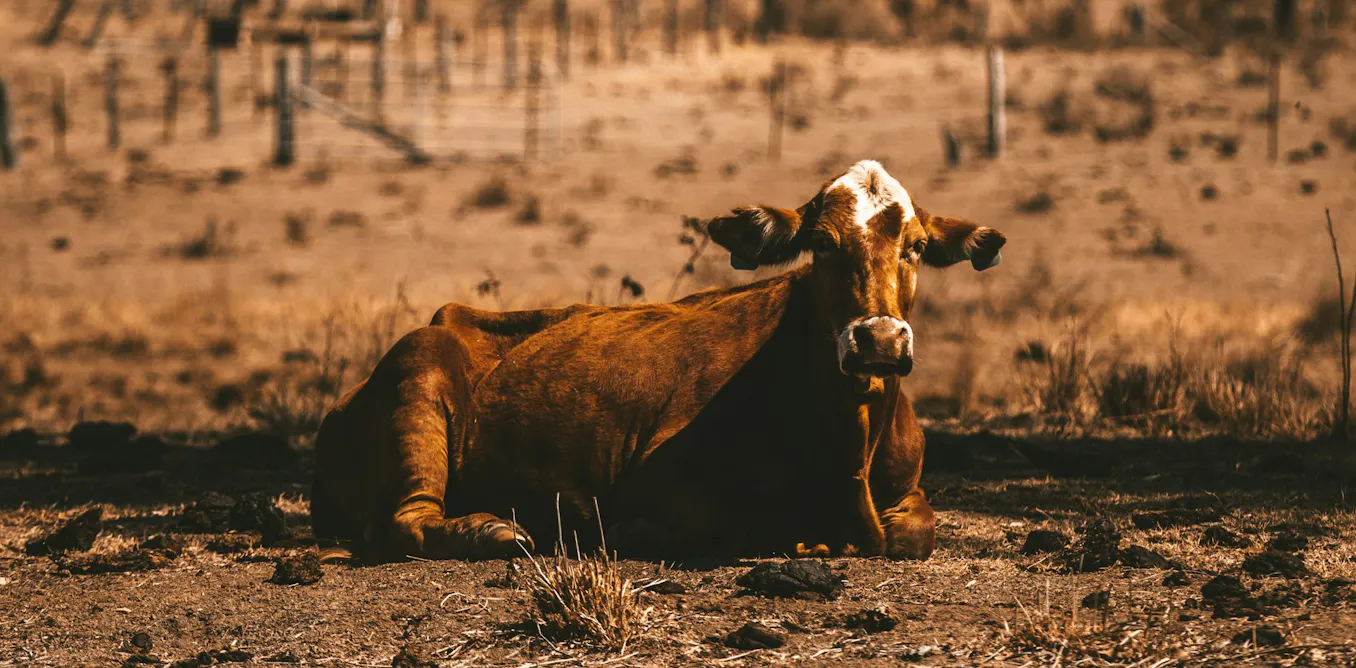
In 2019, floods and sticky mud trapped and killed up to 500,000 cows.
In 2022, record-breaking floods caused a national lettuce shortage.
In 2023, floods hit banana, mango and avocado crops.
In 2025, over 100,000 cows died in outback Queensland due to flooding.
This summer, it happened again. Over 48,000 cattle are dead or missing after extreme flooding in northwest Queensland.
Rising temperatures also make life harder for the animals and plants we rely on. Heat stress is on the rise in livestock. When animals are too hot, their health can suffer and milk and meat production falls.
When floods devastated Lismore in 2022, the New South Wales town had empty supermarket shelves for months after main roads and freight lines were cut.
But farmers’ markets reopened within a week. As one farmer’s market manager told experts:
supermarket shelves were completely empty [but] we had all this produce.
Perhaps Australia should consider growing food indoors.
https://youtu.be/8sOEB2m0m9Y
https://youtu.be/a_pR_HihCVo
so I watched to where they said they only grow leafy greens in vertical farms, anything else is too hard 🤦
Industrial farming is something like 10 calories input for each calorie of food produced: this is likely an order of magnitude worse. I’m sure someone has done the maths.
They did the maths:
"Current data reveals a significant disparity in energy use between vertical farms and traditional agricultural methods. A 2021 Global CEA Census Report indicated that vertical farms exhibited an average energy consumption of 38.8 kilowatt-hours per kilogram of produce, a stark contrast to traditional greenhouses, which averaged 5.4 kilowatt-hours per kilogram. This difference highlights the substantial energy inputs required to replicate and optimize natural growing conditions indoors.
The environmental footprint of these operations directly correlates with the carbon intensity of the electricity grid supplying them. When relying on fossil fuel-heavy grids, vertical farms can exhibit a carbon footprint exceeding traditional field production by a factor of ten or more."
In this real estate market??? That grow room could fit four international students!