

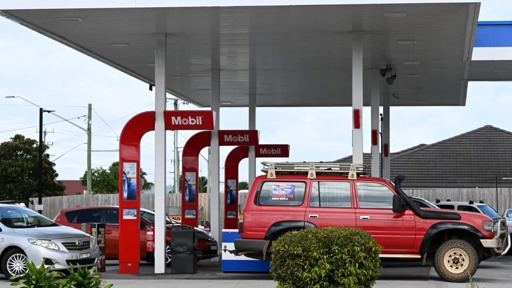
It’s half the price of regular unleaded, produced in Australia and comparably lower in emissions than petrol — yet the number of service stations offering LPG is dwindling across the country.
It’s half the price of regular unleaded, produced in Australia and comparably lower in emissions than petrol — yet the number of service stations offering LPG is dwindling across the country.
Before the rise of renewables and electric/battery, I thought LPG sounded pretty good:
Now I’d rather go renewables, but if there’s any cases where dino juices are required, I still wonder if LPG is the best of the bad choices. Eg, if we HAVE to have an electric plant that’s not renewables, then wouldn’t LPG be better? And don’t mention nuclear, or I will go nuclear!
LPG and NLG are terrible compared to electric for most Australians.
Electric Heat Pump Hot water is more efficient than Gas hot water. Reverse cycle A/C is more efficient than NLG central heating. Induction cooking is more efficient than NLG cooking.
The main benefits in ICE vehicles over pure EV are ubiquity of fuel (even with the current restrictions - it is easier to fill with petrol than to charge an EV) and weight reduction. A petrol tank weighs almost nothing when it is empty and petrol is lighter than water, so only a bit more when full. A Lithium-Ion drive battery weighs the same whether it is charged or empty. Due to the reinforcement and regulator fittings, an LPG tank weighs less than a battery but much more than a petrol tank. Due to the fuel being compressed in the tank, it also weighs more than petrol. Even with an engine tuned specifically for LPG, it is not as efficient as Petrol by volume.
PHEV and EVs are more economical to run in short term. Performance EVs have unparalleled performance, but limited range and limited curb appeal. Soft-Hybrids strike the balance of traditional performance and expandable range. Petrol, Soft-Hybrids and PHEVs all have limitless range (as long as there are fuel stations).
LPGs are the worse of all options. They are more expensive to maintain, have limited range due to limited availability of fuel, weigh more than they should and provide an uninspiring driving experience.
One exception is for camp cooking.
Induction cooking at camp is very energy intensive and requires a very large battery array. More compact solutions like 12V ovens and kettles are OK in a vehicle, as long as the appliance is designed specifically for this application and is of suitable quality.
Isobutane in an thermally engineered pot like a Jetboil is the most weight-effective way to prepare hot drinks or water for freeze-dried hot meals.
For larger camping solutions, and for cold-weather camping, Propane in refillable bottles is best.
Those little canisters of isobutane and propane are not (legally) refillable, but are recyclable and if campers are more willing to cook over gas than wood, they are less likely to burn down half of the state.