
You must log in or # to comment.
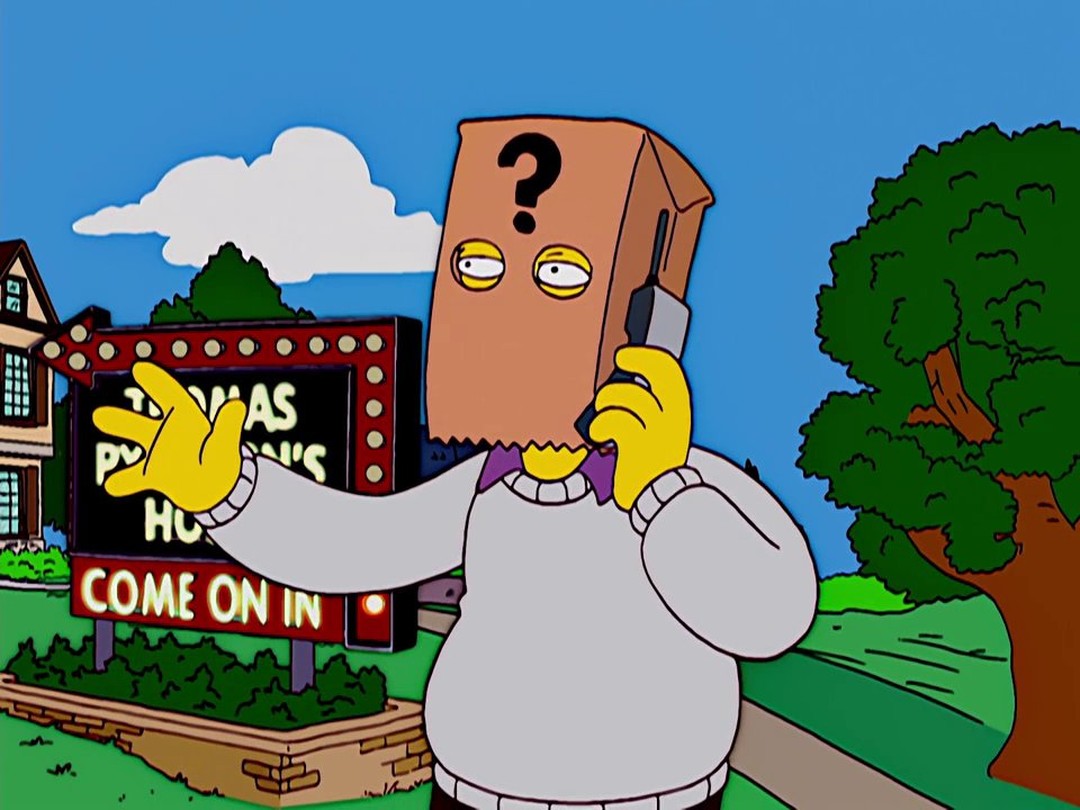
Stay curious‼️ 🤔
Real. Curiosity is such a desirable trait in folks.
But not in cats.
“akshully”
That’s why my friends call me Whiskers
I found by high school the kids who said that (that hadn’t dropped out) moved onto a different argument by that age
Honestly, I know it ruins the joke, but I don’t think there’s as much overlap between the top and bottom groups as one may suspect
The “do your own research” people need to have it explained to them that even experts in their respective fields aren’t automatically capable of parsing scientific literature. A family doctor with 50 years experience who prescribes antidepressants every day will have no deep understanding of what any particular scientific peer reviewed study on SSRIs is telling them. They need a grounding in statistics more than anything else, which most people just don’t have. So the idea that a non-educated, non-scientist can read peer reviewed studies and come away from them with some sort of understanding of the issue is the thing that needs to be highlighted, preferably in high school science class (earlier, frankly). A willingness to slog through scientific papers in pursuit of deeper knowledge is admirable, but is dangerously misguided without proper training. I don’t even mean training in the specific science, but just in how to speak the language of peer reviewed studies more generally. It’s very much its own discipline.
I want someone to ask Joe Rogan what ‘regression to the mean’ means. I want someone to ask him what a ‘standard deviation’ is and how to apply the concept. I don’t want to know what papers he’s read, because you could read 50 true scientific papers a day on one topic and still have no idea what the current scientific consensus is on said topic, absent the requisite training. You’ll almost certainly come away from it with a very wrong but very confident belief. Dunning-Kruger on steroids.
The ‘research’ that the “do your own research” people are referring to isn’t peer reviewed scientific literature.
It’s other fools’ social media rantings.
Seriously if we just hardcore PSA’d even basic media literacy skills into our culture, MAYBE people would stop thinking that random internet anecdotes (which are likely largely bot-driven these days) constitute “scientific evidence.”
Hard disagree, if research findings were more accessible, NOT PAYWALLED, and published with some degree of intent for a wide audience then WAYYYYYYYYYYYYYYYYYYYYYYYYY more people would dabble in reading scientific research and the benefit could have potentially saved science from such rapid collapse in my country (the US).
SO true.
It used to be A LOT easier to rummage through research papers online. Abstracts alone just don’t cut it.
The internet of around 2000-2005 was a very different place, back when the internet was more library than TV.
So much more “Well! Looks like we got a reader!” added to the world, by making it even harder to access.
So much more easement of corruption of science too. “Many eyes make all bugs shallow”, Linus’s Law – ESR.
It’s like free thought has become neglected in the set of fundamental freedoms. “Freedoms forgotten are freedoms lost”. Leaving group think, mass formation, and totalitarianised psyches in the wake of this loss. Where every and any atrocity gets seen as a necessary virtue to protect “the one true way” dogma in the minds of the terrorised and totalitarianised.
Cui Bono (who benefits) from the paywalling of knowledge? Not us. Not science. The corrupt.
If we want children to learn these things, we should teach them these things directly, instead of relying on science classes. I’m not saying we should get rid of science classes, but the people who are saying these stupid things did actually take science classes in school.
We desperately need to teach classes that are specific. I learned a lot about problem solving from math classes, but I was shocked when I tutored other kids, and they only learned the math, but had no idea how to approach problems. And I don’t mean just word problems, but literally even if you just give them multiple equations and variables.
My tutoring often went like this: “I can’t solve this!” “What information to they give you? What answer do they want? What can you do with the stuff that they’ve given you to get the answer?” And then they get the answer. Then repeat. Literally no math involved in the tutoring for math class.
So, we need required classes, early, like in elementary school, that specifically teach problem solving, critical thinking, how to detect misinformation, and what I’ll call empathy. By “empathy”, I mean the ability to imagine yourself in another person’s shoes so that you can predict why they’re doing what they’re doing. It’s essential for detecting misinformation because you need to trust somebody at some point, so you need to understand how to tell who is more likely to be trustworthy. I also think we should teach children meditation techniques.
So, we need required classes, early, like in elementary school, that specifically teach problem solving, critical thinking, how to detect misinformation, and what I’ll call empathy.
Good luck. The 2012 Texas GOP platform specifically opposed the teaching of critical thinking skills. Needless to say, the entire GOP feels the same way to this date. Also, empathy is now considered a weakness or moral failing in those circles.
Face it. The federal government and the state governments of a large fraction of the states are diametrically opposed to our desires.
Don’t get me wrong. I think you’re correct about what our goals should be. But calling it an uphill battle to achieve them would be an understatement of epic proportions.
Edit: 2012, not 2021
It is very much intentional in a lot of places to keep the status quo.
“That’s impossible!”
“No. It’s necessary.”
– Interstellar.
Otherwise… doomed.
But how do you teach those skills directly
Science classes
Okay, but what are electrolytes?
What plants crave…
Science classes
And [other1] philosophy, especially epistemology.
… And it’s quite telling and daunting that
But how do you teach those skills directly
was asked.
Like it was missing the question mark because it was rhetorical. Like it’s beyond their conception, and as if in absence of evidence (or experience) it’s presumed to be evidence of absence of possibility or means to do so.
Looking forward to this year, and more people realising more of how much has been stolen from us.
[ 1 Because science is just another branch of philosophy. Natural philosophy. ]
You simply apply your problem solving skills as an adult. You want students to understand how to do these things. Well, how do you do these things? Then teach the students the method that you use. That’s the simplest version. But there’s been a lot of research about how to teach things, so following the best research is the better version.
I think I gave a small example of teaching problem solving in my 3rd paragraph where I described tutoring math. But you can use any problems instead of simply math problems.
Really, I say this as a very introverted person with a strong STEM background, I think the most important skills children learn from school are their interpersonal skills, but we rarely teach them directly. So, you can work through typical problems in class, like for problem solving, say, you want to use the gaming console, but your sibling is using it. What can you do?
Similarly, how do YOU know when something is misinformation? Just teach the children to take the same steps you do. “I doubt this information because based on these previous incidents, I’ve seen that this person has a reason to lie about this.” Or, “If I think about it, there is somebody who is profiting from people acting on this information, and so I that makes me dubious about this.”
How do you know when a conspiracy theory is very unlikely? The more important it is and the more people who must participate in it, the less likely the theory is to be true. That’s why you can write off flat earth theories almost instantly with very little knowledge of science.
You can teach critical thinking via debate class, for example, but I think there are some other methods, too. Critical thinking is probably the hardest to imagine a way to teach.
Imagine if we learned the spirit of egalitarian pedagogy in school, instead of the many toxic social-domination/social-survival lessons learned.
How do you know when a conspiracy theory is very unlikely? The more important it is and the more people who must participate in it, the less likely the theory is to be true. That’s why you can write off flat earth theories almost instantly with very little knowledge of science.
For a start, probably more sound footing not to start with a presumption presented in a pejorative, to be truly open minded and enquiring, seeking the truth.
The flat earth stuff’s fascinating…
Bear with me. LOL.
There are several allusions being masked by the dumb litteral.
And I don’t mean the under-the-fundament or matrix simulation stuff.
For one,
Maps.
For another, arguably even more intriguing,
Legal fiction. (And all bureaucracy and its reductivism (~ see, not just “flat” because it (once was) on paper)).
“The flat earth”, being a term used to refer to these.
But, if all you ever hear about is the dumb literal stuff, and presume to know, and believe your beliefs, unwittingly being naive realist, then you never get to the deeper stuff.
Non-belief ftw.
It helps you look deeper, beyond the shallows.
“It is the mark of an educated mind, to be able to entertain an idea without necessarily accepting nor rejecting it” – … Who said that?
Far fewer babies get flung out with the bathwater, with this approach.
Then also, it’s easier to see more of the lies within lies, and the lies so vast that not even their inverse are true, and can easier cease identifying with any position on any matter, and watch, unscathed, as strawmen are felled all around you.
Art! Where logic fails to motivate, artistic expression can lead to emotional understanding
deleted by creator
we should teach them these things directly, instead of relying on science classes
Ok, so by “these things” you mean logic, argument analysis, media literacy, critical thinking, etc.
Yes, I had classes like that, and I think they’re much more important than science and math classes. You can learn science and math on your own from YouTube videos, but you need the media literacy to know which YouTube videos you can trust.
I hear children in France are taught philosophy from around age 5 or something.
Imagine that…
Starting education with a firm footing in epistemology. Learning the ability to discern the difference between what’s merely a valid argument, and a sound argument. Learning the ability to discern what’s true and what’s not.
Now contrast that to what’s happening in various other places (especially you-know-where)… Where it’s pure indoctrination, that they do not want you to have the ability to discern truth from lies… Because they’re peddling almost nothing but lies.
I’m going to be that guy about GMO crops. If we were modifying them to be drought resistant or need less water, I’d be all for it. Instead, what we modify them for is to be “roundup ready” meaning that glyphosate can be sprayed liberally on it without killing it making weeding the field much easier. I am not concerned about the GMO crop, but I am concerned with all my food being covered in Roundup.
Also all of the insects covered in Roundup, making ecosystems collapse
And somebody’s gotta spray that RoundUp… hasn’t there been numerous class actions about the effects of that stuff on people who had to use it? 😬
And the scam ruining so many farmers, especially in India, where many took their own lives, by guzzling the very poison that ruined their land and their freedom to plant and preserve seeds. “Terminator genes” in more than one way.
You’re absolutely not alone with GMO concerns.
Celiac enters the chat.Unfortunately you don’t really have a choice. Organic and GMO free doesn’t mean herbicide free, and plants with natural tolerance to herbicides either have genes to detoxify or sequester them in their cell walls. If the sequester them, then you get to eat nice bioaccumulation of herbicide. Glyphosate itself is pretty safe mechanistically, however everyone forgets about the adjuvants its formulation.
Like I just replied a moment ago earlier in this thread.
Imagine where we’d be if not for Bernays, Anslinger and Hearst.
Imagine how good the soil, water, air, and minds would be, if we had still been growing hemp copiously.
Unlike many other plant defences to insects, cannabis/hemp has sticky trichomes to capture them, and the main nutritious part for us is another two layers deeper. Not to mention, we have other uses for the trichomes, like for (very benign, non-lethal, non-addicting) medicine (… “king of panacea” they called it). And the plant is so vigorous itself, it’s often called “weed”, out competing other weeds we have less use for.
Ironically, hemp’s even a powerful bio-accumulator, and can be used to clean up polluted soils. And can leave the soil in a better condition. Can even be grown in the same location for 20 years without rotation before any depletion/imbalance to the soil occurs.
This along with all the other advantages… how it produces versatile super-strong fiber along with food and medicine. Not to mention oil (for lubricants, fuels, plastics, etc), and nowadays, there’s even a very cost effective way to produce graphene from hemp, so we can create things like carbon nano-tubules and buckyballs to make solar panels out of, or leave it as graphene sheets and create capacitor bank batteries, and more.
And it cleans the air 7 times more than pine forests do. Ever been in a pine forest? That’s some seriously clean air already.
And I forget how many times more paper it can produce than trees too. And paper that lasts longer (way, way, way longer), and requires orders of magnitude less chemical processing too. And it’s stronger. Same with cotton, orders less chemical processing, less labour intensive, and produces a product that lasts way longer.
I could go on and on and on further yet. But suffice to say already even at that point, one can see why the competing industries banded together to eliminate the competition.
Either we restore cannabis and start growing it again profusely, sooner, in wisdom, or, we do so later, in desperation (… or not at all (~ too late, all dead)).
Sounds right
As someone who’s graduating in biotechnology, we want and we do, but there are a few things that make this not reach the market.
Round-up ready plants are incredibly easy to make, you insert only one gene (effectively, there are some little extra things but details) and now your plant can resist glyphosate, which means you can make many different species resistant to it much more easily, or make all of the different lines of whatever crop you sell also be restaurant to it.
For making drought resistant plants, there isn’t exactly one gene that makes the plant resistant. Just one example would be root length. If a plant has longer roots it can access moist soil for longer periods of time and thus making it more resilient against droughts, but to make the roots grow longer you have several genes that interact and changing one might not result in deeper roots in a drought environment since that gene is activated by a phytohormone that is upregulated during long days (summer time) but this location only encounters droughts during early spring when the days are still short, and for you to regulate that gene to change when the phytohormone is upregulated you’d need to change a BUNCH of other things on the plant that would result in a complete mess of how the plant develops as now it acts like summer during spring but only for the roots and the roots send signals that the leafs must ignore until the correct time of the year and that changes when the seeds are going to be released because the plant is now blooming at a completely different time and oh fuck we’ve developed the equivalent of ancient Egyptian inbreed pharaohs but for plants, which is horrible but incredibly impressive given that most plants can self fertilize… This is one route of trying to just make longer roots, if we go through giving the root growth gene sensibility to another phytohormone that is upregulated on short days, the roots now will release other phytohormones in higher levels than the plant is used to (more length = more roots = more cells making said phytohormones) and since plants develop through gradients of hormones and the proportion of one vs another, the amount of work to make it so that the plant actually develops correctly will also be huge! And this is just for one single characteristic that we think would help in many cases but wouldn’t actually make plants fully resistant to droughts, just able to get a few extra days of water, unlike how roundup ready is still just add this gene that allows the plant to break down glyphosate fast enough that it doesn’t die.
Now the other side of the issue is funding. Yeah, droughts are a really bad problem for farms, but the BUG farms are either in places that they don’t suffer from droughts that much, in places that they can buy a lot of water cheaply (government subsidies) or can produce a lot of crops even when there’s a drought vs what they’d loose against weeds competing with their crops for water, nutrients and diseases spread by those weeds
In the end, we have the same reasons that tuberculosis and malaria are not funded and researched flash much as they should, it just doesn’t make sense (commercially) to do so for big corporations like monsanto/bayer and the subject is complex enough that several universities having small teams researching it will tackle it from so many different angles and have such a difficult time with it that progress is really slow. The researchers want to work on cures for malaria, tuberculosis and to make plants resistant to droughts, soil acidification, nutrient content of the final produce and much much more, but we’re fighting against capitalism and spaghetti code with no annotations written by thousands of not millions of different coders that didn’t talk with each other through the millions of years of development of said code
Worse now.
Glyphosate’s not just used as a weed killer, but as a desiccant.
Sprayed directly on our “food”.
Oh but don’t worry, our obedient STEM dogmatists can reassure us that it’s no harm to us because humans don’t have the shikimate pathway that it acts on. Pay no attention to our microbial biome, where the majority of our immune system is, and how nearly all of it does (nor other pathways, nor the cumulative toxicity of the other breakdown products, and certainly not any attention to the man behind the curtain with his Codex Allimentarius plans to own all life). … Cherry picking like that is at least as bad as “because it’s got electrolytes”. Socrates, Socrates, where for art thou Socrates? Not in the minds of those who pre-decided the answer and presume to know.
fucking this. fuck the person commenting TINA: there is no alternative. because permaculture crops grown locally over years are far more resilient than GMO and without the fertilizer needed. no vendor-fucking-lock-in on crops.
when shit hits the fan GMO crops are another vector of extortion onto independent family homesteads. simple fact of history, look up what Haiti did to “gifts” of GMO crops from american GMO producers. how’s that for real-world research into politics of GMO
Imagine where we’d be if not for Bernays, Anslinger and Hearst.
Imagine how good the soil, water, air, and minds would be, if we had still been growing hemp copiously.
I think equally important as teaching these things to begin with is letting students know when they’re being taught a simplified model, and that serious academic discourse of the subject is still evolving and/or involves much more nuance (which is pretty much always). some people who do pay attention in science classes nonetheless think that what they learned is gospel and never re-examine it, or stubbornly refuse to acknowledge when said nuance is relevant because it seems to contradict the simplified model they’ve cemented in their brain as the whole truth. the kind of people who say things like “I know there’s two genders because I learned it in high school biology” and apparently never considered why there would be collegiate and post-graduate studies on biology and gender (or why those are two entirely different fields of study) if we all already learned everything there is to know in high school.
I think chemistry is APPALLINGLY bad at this to be honest.
There are something like 10 million students attending Christian school and the like, and another 5 million or so being home schooled.
They don’t really believe in the scientific method and critical thinking, in general. At least in my experience as a student of a Christian school. I had no idea.
Gets me wondering which type of “Christian”.
Reminds me of https://www.youtube.com/watch?v=8swSkk9yeV8 .
There are many christians (not of that^ ilk) who very much are into the sciences, and are undogmatic in their approach to either religion or science. … Which was a surprise to me and my teenage militant aitheism that had swallowed the false dichotomy whole.
Here’s the rub… those practical moderates FUEL the fanatics (donations and tithing), and they also provide the fundamentalists with a smoke screen of respectability.
They’re a huge part of the problem. The fundies depend on the moderates.
I’d say the conflation’s the bigger part of the problem.
There’s always a conflation. Fundamentalists are impossible without moderate support.
To be fair, most schools give those classes only out of obligation. Doing dumb calculations of mols and atomic masses in high school is definitely teaching kids to ask “why the fuck am I even doing this?”
Learning some chemistry basics is probably still good though. Not that we’re using it daily but just in the “hey mixing this stuff can kill you” or, in the same vein, seeing how it only requires small amounts to make big changes.
We’re surrounded by chemicals in our everyday lives, learning a healthy fear of them is probably for the best.
Also high school is meant to prepare you for further education, if you want to pursue that, so it really does cover a lot of ground for basic concepts you need to learn to understand and gain further education in whatever field applies.
Kids are wired to ask that, so what, basic chemistry knowledge is extremely useful.
I had a co-worker who decided to clean his bathroom and decided using a mix of chemicals would be better than just using one! Makes sense right?
He figured putting bleach and vinegar together was a smart move because it meant more cleaning all at once.
Don’t worry, he’s fine. He had a sore throat for a few weeks and the fumes singed the hairs off his hands when he was mixing it.
Dang! Good to not be absent minded, and actually check out the chemical equation, and consider the implications.
Good to be reminded, and learn from others mistakes.
Glad he survived mostly unscathed.
We learnt to titrate in later high school, played with acids and bases and crystallizing crystals in earlier high school
Sure we learnt to calculate mols of chemicals but we also learnt why — so you can balance an equation, so you have no more acid (for example) than you need.
I bailed out of chemistry though. I had a bad teacher in year 10 and moved to botany in yr 11 and 12 (working with scientists testing salt tolerance of eucalypts to address dryland salinity) (I went to a school that covered high school and college (years 7 to 12))
Yeah, like an German Comedian said, while the Teacher shows how an Morse communication works, the childrens with their Smartphones already are logged in his Pacemaker.
LOL I wish it were like that. The “kids and their superior grasp of technology.” That’s how it’s supposed to be. They’re supposed to be smarter than us.
Indeed, with desktops and internet forums it really did seem to be going that way…and then with smartphones becoming specialized as content consumption and attention-capture devices, the kids started going backwards.
Yeah, they can swipe their lil’ fingers and use instagram now, but so can a chimp. It’s designed that way.
Using files and folders or printing their homework? Relegated back to the esoteric and arcane arts. It’s tragic.
But this kids who do make a point to learn and teach themselves are doing incredible things.
So I guess, the average has dropped, and now we’re seeing more dramatic extremes on either end of the spectrum. 🤔
…/TED_talk lol
And billionaires love people like that because it keeps the most obsessive of us focused away from the greed.
LOL, school curriculums are part of the “billionaire conspiracy” too?
FFS.
As someone aware of decades of legal battles to prevent the gutting of education systems, usually noticeable around local levels, you almost always end up at corpo think tanks like the heritage foundation.
If you’re familiar with the heritage foundation, they’ve been trying to run a project2025 style playbook for decades, and it is only through their success that current administration is a billionaire playground. Reminder that elon musk could directly choose for hundreds of thousands of children to die this year by taking aware their food and medicine, because he wanted to. Also billionaires got an unimaginably generous treatment at the same time, worth much more than all of the food and medicine.
It’s more an amalgam of cooperatively evil assholes, most of which have an absurd amount of money for some reason, but yeah, billionaires are a good chunk of why there are whole groups being funded to spend all day every day trying to kneecap educational efforts, or painting academics as evil satanists who are corrupting your children with science.
They are saying people who don’t understand high school basics are useful idiots for billionaires because they’re easily manipulated
Nothing about a school curriculum conspiracy was mentioned, so it’s especially weird that you put billionaire conspiracy in quotes
Ignorance is piss
Kiss my piss
“those people” are drinking piss, literary
Those advocating drinking ones own urine, have some interesting (almost compelling) arguments for it.
Nice quip.
I usually go with
If ignorance is bliss, give me agony
or even
The ignorance that dies is not you
The sad thing is those people did take those classes.
I don’t agree with this. The stuff written by, for example, the “vaccines cause autism” people can sound as sophisticated and authoritative as any textbook. A high-school education isn’t going to help someone judge it according to its merits. Thus the problem is a collapse of trust in authority rather than a lack of basic knowledge, because ultimately an ordinary person can only decide to trust the scientific consensus without meaningfully verifying it.
But understanding how science works is key to having trust in it. If you lack that understanding you may just think it’s a bunch of stuck up eggheads who pick whatever truth is convenient to them.
It really depends how science is taught: whether they’re tought to memorise a bunch of facts and formulas, or actually use reasoning…
But both sides sound as if they have done real science, so a basic understanding of how science is done won’t be enough to tell them apart. You can get anti-vaccine books written in an academic tone with citations. They go through the appearance of presenting evidence. The only difference between the two sides that is visible to an ordinary member of the public is that one side represents “the establishment” and the other side doesn’t.
Even professional scientists have to have a lot of trust in the institutions of science - if I read a paper then unless there is something egregiously wrong, I rely on the journal and the scientific community to check that the authors did what they claimed to do and that they got the results they claim to have.
I think you’re right, to some extent, but I think a slightly more than basic understanding of physics, chemistry, biology, and perhaps most importantly, statistics, helps you cut through a lot of the bullshit extremely easily
Sides?
Oh, so we’re talking about those bifurcated into competing groupthinks, not the search for truth with an educated mind.
“It is the mark of an educated mind to be able to entertain an idea without necessarily accepting nor rejecting it”, not picking a side. And certainly not flinging around sweeping generalisations1.
( 1, and when I was trying to remember/refine that term, I asked an LLM, and it suggested there may also be the following fallacies in that: False Equivalence, Appeal to Authority, Appeal to Popularity, Appeal to Trust/Tradition, Straw Man, Vague Reference, Guilt by Association, Reification, Othering, Composition Fallacy, Division Fallacy, Weasel Words, Anonymous Authority, and of course, Sweeping Generalization. That’s quite an impressive collection. And you did it so slick. Most slipped my attention. I bet you don’t get called up on your fallacies often. Not just from the intimidating arrogant airs, but because you’re so slick with them. Hope that helps you introspect and scrutinise your thinking, and is well received to consider.) :)
Ask some eggheads to show you a virus isolated some time. See what fun rabbit holes you can explore together.
People like this argument, because they can then hate autistics. They could say we are inherently broken and need to be “fixed” or genocided.
At this point, I only respect people who were discriminated/abused/mistreated in their childhood.
People like this argument, because they can then hate autistics. They could say we are inherently broken and need to be “fixed” or genocided.
Wow. You’ve met people offering that inference from that argument? Aaaaand my ilithiophobia strikes again. It’s like hatred of left handed people all over again. Please, if you ever encounter someone with this disturbing notion, please do offer them some better sense. Please explain to them it’s not a moral failing, or failing of the content of their character. Please encourage them to not be so fearful and hateful of difference. And it does not even matter what “causes” “autism”. That kind of “fixing” is abusive as hell… like ABA. Genocide, too… perhaps the most dangerous form of only having one tool in the toolbox. Gotta teach these muppets more tools. Cant leave them running around with such dangerous foolishness, uneducated and unchallenged.
At this point, I only respect people who were discriminated/abused/mistreated in their childhood.
Yup. >9000 times more respect for we few worst bullied at my school. Only a couple days ago I was thinking/remembering/feeling this so very strongly, and how I’d love to reconnect with them all, to share my admiration of them, my sympathies, and perhaps most of all, my apologies for every time I did not find the courage to step in and stand up for them, and worse, any of the few times I joined in to survive.
Real talk: those “boring” science classes aren’t about memorizing facts — they teach you how to spot bad claims and check sources. That skill pays off forever.
Do they also teach how to spot fallacies? Or do we have to get that from elsewhere? Evidence suggests elsewhere.
Internet contains the whole knowledge of humanity… the other 98% are influencers, ChatGPT posts, memes, cat photos, fake news, bots and flat earthers.
I thought Interned contained mostly porn :D
And cat pics.
Similar to memes
Very wise
There is so incredibly much knowledge that isn’t on the internet.
I often share the story how (as the story concludes)
after I renounced formal education, I learned more in my first year alone with an internet connection and a library card, than I learned in the entire 14 years of formal education prior.
… I would not have so successfully done so had I not had the library card.
… And that was back when the internet was more like a library than like TV. And long before the big corporate search engines censored about 99% of the results, like they increasingly did over the past decade.
Do not over estimate the wealth of knowledge the internet has (even with LLMs now). Blind biases lurk. We do not know what we do not know, nor how much more there is to know. Easy to fall into arrogance. And what is arrogance really, but ignorance of our ignorance.
We are all ignorant, no one knows everything about everything, but ignorance becomes a problem when we do not know the difference between what needs to be contrasted and what does not.
I took the minimum amount of science classes in highschool. Lack of science education is less of a problem than teaching you how to sort through bullshit and analytical thinking. I basically think that our school system needs to stop focusing so hard on teaching things from the textbooks in an ever-changing world that’s cherry picked from an endless wealth of knowledge and focus more on learning how to be skeptical and check various sources and such. In school it seemed like research was always just a backseat to the goal, instead of the goal itself.
Ngl I like learning from textbooks now that I am out of highschool. I learn faster too.
And weirdest part is that I still can’t study through my highschool textbooks.
I am geniuenly wondering if they were just simply terrible at picking good textbooks and overall using them to teach.
Maybe now you’re just being able to read things that interest you?