It’s more that all the interesting things that come from prime numbers don’t really work if you include 1 as a prime. So every time you talked about primes you would have to say “something something prime number, other than 1, yadda yadda”.
For example: The Fundamental Theorem of Arithmetic states that every natural number can be expressed as a finite product of primes, and that prime factorization is unique.
So
12 = 2^2 x 3
is the only way to express 12 as a product of primes. But if we include 1 as a prime, then
12 = 1 x 2^2 x 3
    = 1^2 x 2^2 x 3
    = 1^3 x 2^2 x 3
etc. There are infinite prime factorization of every natural number, and the most interesting part of the Fundamental Theorem of Arithmetic no longer holds.

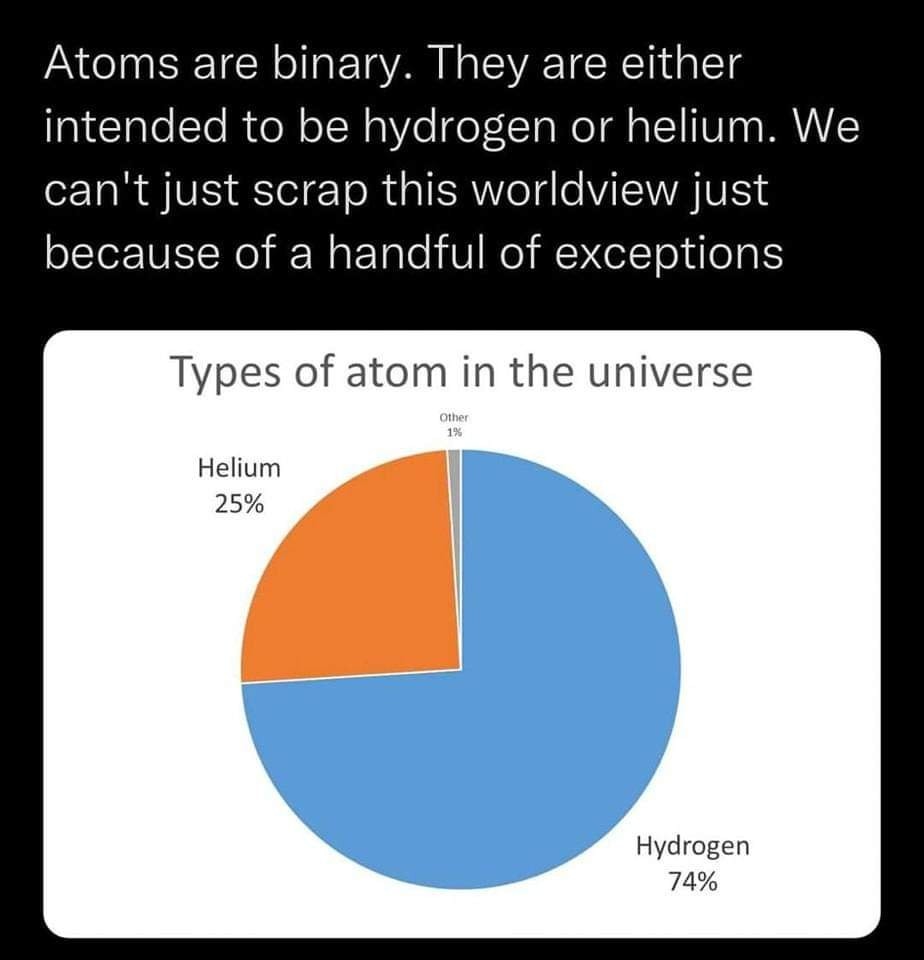
The funniest part about this is 1 isn’t even prime.
That’s always irked me. I get that one is very very special.
It’s probably because I learned that a prime only “has factors of one and itself”… rather than “exactly two unique factors” per se.
It’s more that all the interesting things that come from prime numbers don’t really work if you include 1 as a prime. So every time you talked about primes you would have to say “something something prime number, other than 1, yadda yadda”.
For example: The Fundamental Theorem of Arithmetic states that every natural number can be expressed as a finite product of primes, and that prime factorization is unique.
So
is the only way to express 12 as a product of primes. But if we include 1 as a prime, then
etc. There are infinite prime factorization of every natural number, and the most interesting part of the Fundamental Theorem of Arithmetic no longer holds.
That… helped! :-)
TYVM for explaining that!