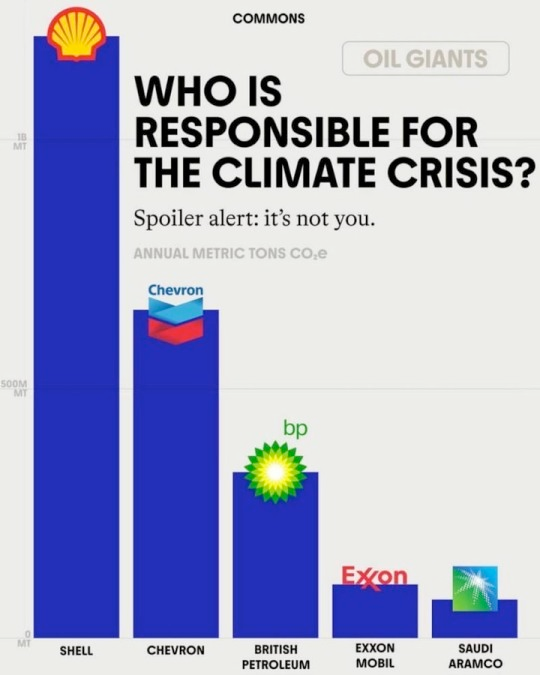
This is a false choice between huge lifestyle changes for everyday people and regulating the polluters. Regulating the polluters is going to cause huge lifestyle changes for everyday people.
The idea that any of us get to go on as usual is the main roadblock to meaningful climate action.
Well can’t we just ban Shell from selling oil, and then get in our F150s to drive to the airport?
Gotta use at least a 350 to transport one person to the airport
Or, better yet, people who “love nature”, so they drive an SUV every weekend for an hour to get to a cottage / camp / cabin. Or go camping, or canoeing, or whatever.
i assume F150 is an electric vehicle. electricity doesn’t come from nowhere. where does the energy come from?
F150 is a huge American ute that burns tons of gasoline to get around.
they make electric f150s, according to my just right now internet search. i buy japanese cars when i buy cars. statesian brands are soiled.
I’m cool with that. I also don’t think it would necessarily be huge in terms of inconvenience for the average person because alternatives would pop up before long. For example, if air travel became prohibitively expensive we might actually see an expanse of passenger rail for domestic travel. It’s ridiculous that it’s still cheaper/more convenient to take a 45 min flight (plus the time the whole airport experience takes) vs a couple hours (or less with high speed rail) train ride. Certain plastics might also become too expensive so we might see the return to more sustainable packaging. A lot of the oil and byproduct consumption from the average person comes down to lack of choice ratger than people choosing products made from oil ober alternatives.
No, we are past that point. A gradual reduction in CO2 levels is not enough any more. If you want to save billions of lives we need to cut CO2 production hard and right now. Since that is never going to happen you happy go lucky scenario becomes impossible. In any realistic climate scenario humanity is already fucked, it’s only matter of how much exactly.
Correct, we are likely going to need to do geoengineering for a 100-200 years while CO2 gets reduced gradually.
Baking soda aerosols are looking promising. They can just at 2-3% sodium additive to all jet aircraft exhaust and it will be enough to reverse the current levels of elevated CO2.
Start doing some real chemtrails.
i mean, i’m not sure where you live but we’re seeing sizeable towns [populations <10,000] getting eaten by fire on my side of the continent (pacific west coast, north america [i’m in california. it’s been a mild year so far but fire season officially started two weeks ago in my town. so far only three fires worth mentioning!]) and before you start on any “need to rake your forest or manage it better or let it burn”, people been living there for 400 years if not longer at the one close to me that burned a few seasons back. much longer at the one with 200,000 people that half burned a few more seasons back. kindly leave that victim blamey bullshit at the door.
agreed, we’re already fucked. the question now is how fucked and whether we’ll be around when the planet recovers.
The planet isn’t going to “recover”. We’re fundamentally changing the atmosphere, and it’ll never go back. The planet will be fine, some forms of life will go on, but the planet will not settle back into something hospitable to current complex life.
megafauna never really came back. like, this one is very different from the ones before, but it’s not going to extinct everything.
So oxygen in the atmosphere is relatively new geologically speaking, and oxygen is incredibly reactive, it oxidizes things which is a fancy way of saying it dissolves things slowly. It pretty well killed most things that weren’t already equipped to either process or release oxygen as waste. We’re good at dealing with it but we’re pretty sensitive to the exact mixture of air (which is mostly nitrogen anyway) and we’re likely past a point of no return for cascading runaway effects changing that mixture. That’ll kill most air breathers. The greenhouse runaway effect will acidify the oceans, killing most ocean life. The increased energy in the system from the greenhouse effect causes continent-wide superstorms that literally scour the face of the earth into something unrecognizable. Most of what survived before won’t survive that.
So yeah, earth will move on and there will likely still be some form of life on it in a few thousand years. But it won’t be us, or anything like us, and it never will be again. We are this planets only shot at producing space-faring life.
It would be a massive inconvenience, but it’ll still be worth it. High speed rail takes many years to build. People hate lifestyle changes. Hell, people will be unhappy at the changes to food packaging. Everything will become more expensive and the economy will contract.
If we go in promising it’ll be easy people will get mad and balk when it gets hard. If we go in explaining how it’ll suck, but that we’ve got a plan to fix the problems and it’ll be worth it then we can succeed
This is a political non-starter, and you’ve pretty much gotten to the point all the people criticising this post are trying to make. Almost no one is willing to make a significant sacrifice in their lifestyle for the sake of the climate, which is why memes like the above exist. They create a make-believe fairytale land where we just have to beat the big bad, and we can all live happily ever after.
But imagine what would happen in any democratically elected nation if a politician actually started making everyones lives worse. Sure, some would keep a stiff upper lip and bear it - but the vast majority would put them out on their ass asap in favor of the first person who said they would make things better.
That’s why literally every climate proposal includes policies to improve things for the average person. Carbon dividends or UBI or trains or street trees or green jobs, etc. You have to be realistic about politics as much as you are realistic about carbon economics.
BLIMPS
Americans simply have no idea how much of what they take for granted is simply an unsustainable luxury. That absolutely includes leftists, too.
K that’s fine
Nothing changes until the price of an electric car is less than the cost of a gas one when it comes to the vehicle cost.
A Hyundai Sonata is 35k CAD
A Hyundai IONIQ 6 is 55k CAD
Miss me with that bullshit.
This is why buying new cars is dumb,
A used Hyundai sonata 2024 is ~20k USD
A used Hyundai ioniq 6 2024 is ~24k USD
Yeah it may be more upfront, but most people finance any way and your monthly payment will be offset buy your fuel savings.
There’s enough of a stock of used EVs, quite often with low mileage, at this point that cost is becoming less of an issue for people then the perceived lack of convenience. That and dealerships/manufacturers not promoting them because they get less maintenance fees and they’re lower margin then a giant SUV or pickup.
most people at this point chosing fuel over electric, the main motivation is best case “habit” or worst case political statement, it has very little to do with money or the technical limitations of the vehicles anymore. They just don’t like change, they’re scared of it. They have driven a fuel car all their lives and they will continue their habits as long as they are allowed to. The range on EV’s is crazy now. For christ’s sake, an electric bicycle has a reach of 100km! How far out away from what they need do the average 90% of people live… less than a few kilometers.
It’s really not that hard to put a price on societal collapse and the end of humanity: the money it costs to try to mitigate that is infinite and every decision every person makes right now should be made in that light of exponentially higher costs later if bad choices which now seem slightly less expensive are made now…
Yeah. If you’re paying for the car outright, your free cash every month will be higher, which can go back into savings. If you’re financing the car, your monthly expenses will quite possibly be the same or lower, because you pay for gas every month, too.
I just looked in Canada
2024 sonata. 28k
2024 IONIQ 6. 39k
I’m sorry I’m not paying over 10k more for an electric car that’s absolutely insane.
Not equivalent, the IONIQ is luxury
You appear to not be factoring in the constant costs of fuelling. Those who can rig wind or solar (¿Por que no los dos?) in particular will make up that 10K difference easily over the life time of the vehicle. Using Ottawa gas prices (about $1.73/l) your 2024 Sonata needs about a hundred bucks to fill up the tank. Unless you’re one of those stereotypical “grannies who only use the car to drive to church every Sunday”, the CAA puts the average driver as doing roughly 50 fill-ups per year. That means if you own the Sonata for two years you’ve already used up that $10K difference.
Every refuelling after that puts you into the hole.
And that, right there, illustrates the difference between capital expenditure and ongoing expenses.
Your IONIQ, incidentally, will ideally cost virtually nothing if you can spin up a wind/solar system to charge it. If you have to pay off-peak grid rates, however, you’ll find that for Ontario you’ll be paying about $450 per year charging.
Look into the hidden cost of being poor. I was indeed factoring in this.
The point I’m making is people without money do not have an extra 10k to put in a car even if the lifetime cost is less due to other reasons.
This is also why rich people buy good shoes and they last for a few years. Poor people pay more but buy cheap shoes which have to be replaced yearly.
So I stand by what I say. The actual sticker price of that electric car needs to be the same or less than a petrol car for it to receive mass adoption.
Hyundai Sonata is a budget sedan. Ioniq is their top of the line electric. Perhaps look at Hyundai Inster or Hyundai Kona or something.
Budget 😂. In South Africa the Sonata is one of their largest sedans.
Hyundai Accent is the budget one. Elantra is the mid-size one. I doubt either are available in the US.
Dollar converted, the Accent costs about $12k.
The US car market is so cooked.
Ah yes, you’re right. I just googled the model and read “affordable midsize sedan” in a result.
Slate is 25k
Now factor in lifetime costs of repairs and gas/electricity!
BTW I have no idea which one is which of your two cars 😅
Isnt byd and other chinese ves a lot cheaper compared to the brand new normal cars? No wonder china has majority ev owners and drivers. It can be done, gas cars can be replaced, but the main problem with the oil company’s is that they have huge influence in the government and hmthey have huge power, boyboy has a wonderful video about this topic. They destroy nature, they only care about profits, they lobby against any ev or even hydrogen cars, they are the main reason why climate change is only accelerating in the west. At this point we as humans cant do anything legally to change this.
I bought my fully loaded ioniq 5 for 31K euros Used…
Honestly, I believe the main roadblock is the idea that change will need to happen at all. The sad truth is that most people are fine with contributing to climate change so long as they can keep doing what they’re accustomed to doing.
The only way I can see for meaningful climate action to happen is to get people on board with regulation polluters while allowing them to be ignorant to the fact that lifestyle changes will have to follow, and then when they’re forced to adapt, they will. People are much better at changing when they can’t afford not to than when they have the option to just keep on doing what they always have.
People are also a lot more likely to make sacrifices to keep up momentum after a win like regulating polluters; few people are going to change first when they can see a company like Shell - polluting more every day than they have in their entire lives - going unchecked. A change has to happen to give them hope that the climate can even be saved before they try to make changes themselves to save it.
Yes, but regulating pollutors requires a populace that won’t accept anything less. Instead people are placated by paper straws.
idk. i got an ebike and my lifestyle didn’t change a while lot. just had to get one with a trunk, uh, big basket strapped to the back.
To the people who are saying “Yeah but you’re the one who buys the oil!!!” Please stop. Please think about any of the context surrounding those supposedly individualist decisions. Please think about what the most practical solutions are for fixing the problem. You can do that and be helpful or you can be smug and look down on others.
Sure, you buy and drive the car, but you didn’t:
- Design towns and cities that can only be easily traversed by car.
- Decide where jobs and housing were located.
- Spend millions of dollars to lobby against public transit.
- Spend millions of dollars to lobby against regulations.
- Spend millions of dollars to lobby against green energy investments.
- Spend millions of dollars to lobby for imperialist wars to access oil.
- Spend millions of dollars to spread misinformation about climate change.
- Decide what cars were available to buy and at what price. (Demand driving supply only makes sense if consumers have a way to signal that they want something that isn’t being offered. The main market way of doing that would be to not buy anything until the right good is offered… but as stated above, people can’t just opt out of needing a car if the places where they can live and work are built around cars.)
- Decide to be too poor to buy luxury goods masquerading as green alternatives.
Framing the issue in terms of individual decisions lets the people who have most actively stood in the way of progress off the hook and ironically shirks any real responsibility to fix the issue. You think by saying that it’s us doing it that you take responsibility for your actions and therefore because YOU got a hybrid car or some shit, you did your part and everyone else needs to do the same and it’s not your responsibility anymore. Needing to put in the political struggle to take on the corporate interests destroying the planet takes effort that deviates from your normal life. You have to actually talk to people, work with them, and take part in collective action. And your responsibility isn’t over until the problem is solved.
Also, sort of related: I always take issue with how dealing with issues like climate change is framed in terms of making sacrifices. Like sure, are we going to be able to do as much excessive consumption as we do now? No. But there are so many climate policies that would also just make life better for people in the short/medium term. We would be happier, healthier, and safer in a world where we got rid of our dependence on cars and replaced it with walkable cities and good mass transit. But instead of talking about how good it could be, instead the message ends up being “You’re a bad person for diving a car. You need to give up using your car and go either walk to your job which is too far away and across a bunch of busy streets or cram yourself onto the underfunded public transportation that is crowded, slow, unreliable, and falling apart.” No wonder people get so defensive. We don’t want them to have to use the bad infrastructure. We want it to be so good that it’s the best option by far. Pitch that future instead of lecturing people.
TL;DR: I WANT TRAINS! GIVE TRAINS!
Trains and trams are based af
Buses are pretty great too, to connect the more rural areas
As long as they’re not routed through main commute hubs. Where I live (near a major german city, so there indeed is at least something) all the bus connections to the closest subway station of the city are routed over a small portion of a major street. That alone causes massive delays every morning and often also in the evening when everyone pours in- and out of the city in their gas guzzlers.
I’m very much for having waaay more (semi-subway) trains even in rural areas. Even if it’s just small ones that never exceed 50kmh or something, having a trustworthy schedule would be worth it. Connect every milk can! (After giving it 5G)
That is definitely true. Buses are way more susceptible to shitty traffic engineering than railways. Though buses can work really well at traffic choke points too, when good traffic engineering is employed. Where I live, the bus can always zip right past all of the morning rush hour traffic and there is nothing more satisfying than looking out of a bus’ window and laughing at all the car-idiots standing still, stuck in traffic :3
But yeah, railways rule, I meant buses for the really bumblefuck places out there where rails wouldn’t be economical.
I find it hard to be enthused for trains, trams, and busses any more, since discovering over 20 years ago that clean energy and many other technologies and man-made innovations have been suppressed to maintain out dependence on scarce polluting energy because it’s easier to put a meter on to extract rents by. … So much so… y’know we could have had spaceships each since the 1930s? T Townsend Brown was not the first nor the leading pinnacle. Even back to the mid 1800s, when they were rigging their hot air balloons with faraday cages and high freq e.m. fields to reduce, and even eliminate inertia [… 1 small vacuum-proofing hop, and you have rudimentary interstellar flight capabilities]… … we never needed rockets, we never needed planes. … we don’t really need buses either. Or cars.
But if we make a nice world, buses still could be very nice to have.
Semi-subway trains too.
And cars even too. Track day, anyone? :)
Whole lot of vertical space unused in this world [and beyond]. We have so much headroom without the crooks holding us down. Heck! Even the crooks, even with their billions and trillions, would be better off, if we availed, each and all, all the emancipatory technologies.
And regarding your other points, don’t forget urban planning. Trains and urban planning go hand in hand. You can’t transform transportation by trains alone if everything is suburbs and city jobs, for example.
110%. Walkable cities and trains. Let’s do it.
Yes, walkable cities and trains but also planning out where people live and work. Where people live is currently left up to the anarchy of the market, real estate speculation, where employment is located, etc. Then they have to get from where they live to other places they want or need to be, usually work. With some planning these things can be made intentionally dense, closer together, cheaper, and on transit lines.
We’re all responsible. I’m sure a lot of Romans used this argument when their slaves came after them during the Servile Wars. And it probably didn’t go well.
American comment is American
USA #1!.. at a bunch of things you don’t want to be #1 at.
I agree, I love trains too!
Is it also not the fault of the 99% who vote for non-Green parties who then make the laws causing your bullet points?
Waaaaaaaay less than the people who have used their power to corrupt said system. Capitalists wouldn’t have spent this much money on lobbying and propaganda if it wasn’t needed. They try their best to keep some people from voting and the rest from having any viable choices that reflect what they want.
It’s just counterproductive to conceptualize our current situation in terms of individualized guilt. It’s not like going to privately check a box every few years is doing much more than choosing to consume a bit less. We need to be organized. Our enemies are and they’re winning.
Also the voting thing ignores the failure of electoral reform in preventing the two party system, and divorcing of the peoples intent from policy for the sake of lobbyist and corporate preference.
While more can be done locally, there have been think groups and other money-lead influencers affecting local efforts for as long as the heritage foundation has been supplying fascist mandates to USA presidents.
There were a lot of people trying to make that salient, and decide action in response to it, when suddenly all progressive groups decided the true threat was other progressive groups for some reason, and anyone trying to resolve that or encourage better communication or cooperation between progressive groups is actually secretly supporting the fascists somehow, because we out here dividing ourselves to be conquered.
Issue totally isn’t rich assholes with too much time and money pushing some policy sitting between feudalism, fascism, and whatever the fuck you would call what putin did to Russia.
I’ve been complaining about self segregation and communication issues for decades, and have been chastised/banned from a weird chunk of progressive spaces I’ve interacted with over this exact problem.
the two party system
The UK has a first-past-the-post system, yet the 2 parties that have won for decades (Labour and the Tories) are polling behind other parties like the horrible Reform and (in Feb and March) the ethical Greens.
People can choose to vote for Greens if they want, but most choose not to. The billions who fly and drive can stop, since there already are billions who don’t fly or drive (tho for the latter it’s mostly because they’re poor, not because they don’t want to be complicit in a mass-extinction event).
there’s a lot of “if you don’t vote for the establishment party you are throwing your vote away, and trump is 100% directly your fault” rhetorics that are meant to discourage that kind of stuff, but i absolutely do wish people didn’t just give up actually getting behind something that isn’t just a temporary slowdown on the road to corpo fascist dictatorship.
Is it also not the fault of the 99% who vote for non-Green parties who then make the laws causing your bullet points?
Waaaaaaaay less than the people who have used their power to corrupt said system.
In the 2024-11-05 US House election there were 149.5 million votes (I don’t know how many eligible total), and 0.2 million voted Green.
In the 2024-11-05 US presidential election there were 155 million votes (only a 64.3% turnout), and 0.8 million voted Green.
In the 2024-07-04 UK election there were 48 million eligible voters, and 1.9 million voted Green. However, polling shows that despite the UK’s first-past-the-post system, the Greens (in Feb and March) regularly polled ahead of both Labour and the Tories.
Excellent comment!
Design towns and cities that can only be easily traversed by car.
Just to reiterate, there is something you can do about this. Lobby your local decision makers. They’re not waiting around to be guilted into anything, but they are generally happy to talk to residents and are open for reasonable arguments.
(That doesn’t mean local politicians are reasonable people. 90% of the ones who run things where I live are a lost case. But there are always the odd exceptions who are willing to listen and will work hard to make a difference.)
I posted a question about it a few days ago, but atm my tiny project is to get my town to plant more trees along the sidewalks so it isn’t so torturous to walk anywhere when it gets this hot. I tried emailing someone from a department I think handles this kind of thing, but not 100% sure and I haven’t heard back yet. I guess I’ll follow up soon if I don’t get a response.
Sure, you buy and drive the car, but you didn’t:
If you vote for political parties that support these policies it’s on you too, with your vote you handle them your responsibility
>>“Spoiler alert: it’s not you”
>>proceeds to display a chart of companies who sell a fuel we all use
If you can spot me $30,000 I’ll get an electric car today
First, I have to get a new range hood, repair my foundation drain, regrade my yard, and earn a spare 30k after that.
I think I’d get close to $5 if I traded in my current car, if that helps
I’ll give you $3.50
Just do what you can, when you can. It’s all any of us can do.
Oh, the old “it’s the consumers responsibility” fallacy.
Nothing will change if it isn’t forced, or if electric cars get cheaper.
My sister has that as a tattoo (or some variation on that wording).
And yet, it seems to have become an excuse for why she’s allowed to buy a big gas-guzzling SUV, and drive it whenever she wants, wherever she wants, and fly around the world for fun.
If she’s ever asked, she’s an environmentalist who loves nature. But, she avoids ever having to make tough choices about her own lifestyle because she allows herself the grace to just do what she can do, and not agonize over the rest.
30,000? A domestically manufacturered, highway-capable EV is 10,000 USD here in vn and even cheaper over in China.
Who do you think is responsible for your inability to buy reasonably priced evs?
space karen
if you can repay it tomorrow i can spot you 30k today
just don’t ask where i got it
Whatcha gonna drive it on? The streets and roads are a major source of CO2 by themselves.
If someone can spot me $300 million, I’ll get functional public transit going in my city instead.
In the meantime, my options are drive a car, or be unemployed.
You’d also have to deal with all of the residents who pitch a screaming fit any time anybody suggests maybe possibly removing a parking space. Unfortunately, it’s a whole, self-reinforcing system, not just the fault of a few corporations.
I’d argue not having to burn your fuel is already a great improvement
I hope big oil is paying you well for propagating their “personal carbon-footprint”-narrative.
What do do you say? They don’t even pay you? … Then why are you doing it?
Because I don’t trust anybody who tells me things I wanna hear like “you bear no responsibility; it’s somebody else’s fault”.
Oil companies couldn’t sell if nobody was buying. The idea that the world can be fixed and I won’t need to sacrifice a thing is a little too good to be true. Sure, maybe others will need to make more changes than me, and I’m certainly not gonna let them off the hook, but I’m not gonna let myself off the hook either, and anyone who tells me I can is selling me something.
The idea that the world can be fixed and I won’t need to sacrifice a thing is a little too good to be true
On one hand I don’t think people are saying that. On the other hand, there are some radical views here on Lemmy.
Sure, maybe others will need to make more changes than me, and I’m certainly not gonna let them off the hook, but I’m not gonna let myself off the hook either, and anyone who tells me I can is selling me something.
I am 100% with you here.
“we all use”
Speak for yourself. I refuse to pay them a cent, and have taken every step I can to distance myself from them.
Most of the factories that manufacture the stuff you use are driven by fossil fuels. The food you eat is most likely grown using fertilizer that was made using natural gas. Unless you live in the forest and eat nuts and berries, you use fossil fuels.
The factories may use fossil fuels, but I do not.
The fossil fuel companies are responsible for their own actions, as are the companies and people who still choose to use fossil fuels.
The people who have made an active choice to avoid fossil fuels (or the people without a choice) are not at fault. Blaming them instead of the people who can make a difference helps no-one.
Whoever said “instead”?
It’s trump diddling kids, not me!
- this guy, eating a trump steak on trump airlines.
ohld on, i’m doing a google. how many Gs is electric grig supposeed to have?
You realize that fossil fuels or natural gas are not evil by themselves, right?
What causes climate change is burning them and releasing CO2 in the atmosphere.
If you use it to create fertilizer, or plastic, or whachamacallit, it doesn’t create greenhouse effects.
it’s still putting energy into pumping it up. And what happens with the fertilizer, or plastic, or whachamacallit? It gets consumed.
The fertilizer best case becomes plant, gets eaten, pooped out yada yada eventually it becomes the greenhouse gasses. Worst case it’s spilled into the environment as overfertilizing runoff, where it offsets soil balance which helps to release… greenhouse gasses.
The plastic: after use: what happens with it? It gets burned best case, which will release greenhouse gasses. Or it end up in the ocean, not greenhouse i guess, but also not that fun.
When we extract fossil carbon from deep down to the surface, there is a very high chance it will become greenhouse gas. Some of it becomes greenhouse gas almost immediately, some of it only after a few decades, but it’s still offsetting the balance of the globe and adding to climate change.
Fossil fuels are not evil by themselves (how can anything without consciousness be evil?), but many other uses than burning it to go vroom vroom also pose problems to global environmental systems, many uses will also end into processes that will also have negative influence on greenhouse gas situation. Plastic is a miracle material with many very good uses, but the way it is still mostly used now (use once, throw out, burn) is still adding greenhouse gasses.
Fertilizer helps plants grow (and bind carbon from the atmosphere). Doesn’t “become plant”. Poop doesn’t become greenhouse gasses. Poop will exist anyway, with or without fertilizer. You got most of it wrong.
PS: Plastic can be recycled as well. Even if it’s not, you just don’t burn it at the end.
Poop decomposes and becomes greenhouse gas. Fancy new filtration plants capture some of that gas and produce electricity with it. Most is not captured.
Fertilizer mainly helps 1year crops grow, aka food. Not forests that will bind carbon for hundreds or thousands of years. The typical large scale agricultural industrial operations cause more release of carbon than they bind it.
A very large part of the produced fertilizer is used to, often on land where there used to be carbon binding forests, grow soy, corn etc to feed enormous amounts of livestock. Which we then eat. It is a manyfold less efficient way for humans to consume animal protein rather than plant proteins. Producing and using lots of artificial fertilizer is for sure not a positive effect on global climate change.
Are you using ChatGPT or just making stuff up as you go?
That’s even more of a reason to focus on buyers rather than sellers.
Well i don’t create the system. Given the chance i would rather not be a part of it.
“We’re not evil for selling you something that will destroy the environment, you’re evil for being forced to buy it from us!”
“I’m not a monster for choosing to drive a gas-guzzling SUV, it’s the evil oil companies!”
I’m not pretending these companies are blameless. They certainly lobby to reduce people’s alternatives. They probably break any environmental regulation they can get around, and just pay a fine if caught.
But, fundamentally, they’re a business. They wouldn’t be pumping oil out of the ground if people weren’t buying it.
Removed by mod
Godammit. I’ve boycotted Exxon and BP, for their negligence that led to spills, for a long time. I knew shell probably wasn’t much better but I’ve preferred them anyhow. Turns out I was helping the worst offender. Awesome.
It in fact doesn’t matter much which one you buy from, they all sell the same product and the product they sell is the problem.
Yes, it’s impossible to effect change as a single person so government action is needed… But the necessary consequence of that is that we also stop consuming as much fuel.
if it’s impossible to affect change as a single person, then why do anything at all? Why bother to vote? I hear this logic all the time and it doesn’t make sense to me.
- “Don’t bother making personal changes, voting will save us!”
- people vote for Trump
- “Wait not like that”
That’s not to say that public policy is pointless. “Tragedy of the commons” tells us that regulation is necessary. But I think the framing is wrong. The culprit here is not oil companies. It’s oil. If you tell people “oil companies are evil”, and tax the oil companies more, these people are just going to get mad when the taxes trickle down to them in the form of higher gas prices.
The correct framing is “Oil and gas cost more to us, than the cost of simply digging it out of the ground. The added taxes are to reflect the true cost”. Then people will understand why gas prices need to go up.
Then add on some Infographics and memes that show how much more efficient public transit is. How solar panels pay off over the long term. Etc. Because personal responsibility does in fact make a difference.
“tragedy of the commons” is capitalist myth making
Just a friendly heads up, it’s affect, not effect.The way I remember it is affect is an action, and effect is the result of an action. English is dumb.I was confidently incorrect. See below.
No, they used effect in its verb form correctly.
effect
effected; effecting; effects
1: to succeed in doing or achieving (something) : to cause or bring about (something) : accomplish
effect a transformation in company culture
effected a settlement of the dispute
… a powerful reminder of the potential of technology to effect change.—Chris Gallagher
2: to put into operation
the duty of the legislature to effect the will of the citizens
… an executive grant of clemency … to effect the prisoner swap.—Eric Tucker et al.<
English! 😆
Your point should be that usually “affect” is the verb and “effect” is the noun. I’m having trouble coming up with a mnemonic device, but at least these can be pronounced slightly differently.
Thank you for the correction!
These companies are monopolies, they can’t be significantly materially affected by a consumer boycott. Most of their customers are in industry anyways. Any boycott against them is more about raising awareness than achieving something, it’s a diffuse form of political education.
To take on the fossil fuel industry requires having control over big levers at the top of the economy. Those levers are currently pulled, anarchically, by capital, not actual humans. Capital pulls those levers and spurns its highest level servants to get out of the way or feed it more bodies. To end this society-wide violence we must displace capital, it must not be in charge. We must be in charge.
And you base that on… a shitpost on lemmy without a source or even a damn label? It’s literally bunch of rectangles.
Cool, you’re a jerk.
Ah yes companies that famously refine oil only to pour it into a hole and light it on fire for their own amusement, one else uses it at all.
If it’s just these companies that would be affected let’s just close them down. I’m sure it would make no difference whatsoever.
Shell also dodge paying fair taxes. https://www.ftm.eu/articles/shell-shifted-billions-in-profits-to-tax-havens-leaked-files-reveal
Please, dodging taxes is the least of Shell’s atrocities.
Who buys and burns most of the fuel they create and why?
“there is no ethical consumption under capitalism” has to me always been a clear call to reduce your consumption within a capitalist system. yes, it is these shit heads who shackle us. but when we reduce our dependence on them we begin the breaking of our bonds to a system that kills thousands every year
No ethical consumption under capitalism, I scream, at my local farmers market. (Made up quote btw).
But yeah, fuck oil companies, they are real fuckers.
Farmer’s markets, co-ops, and mutual aid all exist as forms of resistance to capitalism purely by making sure your dollars go to people within your community rather than get captured by the modern company store through Wal-Mart or Target. At the same time though, they are also not everything. It’s a whole thing. Nothing anywhere is or can be perfect. The best we can do is the best we can do. I know that sounds like a thought terminating cliche but sometimes it’s important to set aside the things you can’t control and to focus on the things you can and have faith that the more people that do that the easier it will become to resist the horrors that surround us all
How is a farmers market a resistance to capitalism? It’s in the very sprit of capitalism to increase efficiency and remove the middle man
Increasing efficiency isn’t capitalism; letting those with capital decide is capitalism. If you exclude capital and just do the thing directly, you’re resisting capitalism.
most farmer’s markets where i am have a heavy emphasis on community building and resiliency as well as income stabilization for vulnerable people with the bank’s sword of Domacles hanging over them. of the three i mentioned, they are the weakest form of resistance but they still have a role to play, which is why Granges put so much work into making sure they are available to non members of the grange
capitalism is a way of organizing society such that the means of production are owned by private interest, and the working class is employed by the owners to produce goods. a farmer working their own land is not actung as a capitalist.
A farmer farming their land and sell it is absolutely participating in capitalism and moreso if they hired farm labor.
if they have hired labor, that does change the analysis, but selling the product of your own labor is not capitalism.
So I should starve to death so that the multinational conglomerates never have to face any consequences? Miss me on that one.
this is in fact the opposite of what i’m saying
I always hate that most people are happy to blame corporations, forgetting we are consuming that’s why corporations are creating.
yeah, it is like blaming china for a pollution, when that pollution is externality of cheap shit we buy from them. it is our pollution in the end.
that isn’t an argument for blaming the end consumer, because that problem is not going to be solved from the bottom, but it is also childish to pretend like we, the consumers, are not complicit.
You should read Terry Pratchett’s Boots Theory. Many people don’t have the option to pay more up front to consume less, if there is even an option to buy a more expensive but longer-lasting item in a given market any more.
Many people don’t have the option
well many do and they will buy cheap shit anyway. and i am not talking about boots, i am talking about people who have a dog, which is clearly non-essential expense, and they buy him shitty toy from temu. is that rubber toxic? who knows, who cares, look how cheap it is!
Well said
I agree. It’s obvious to me that it will never be a tidy “it’s just them to blame” scenario but people really want it to be, regardless. I suspect the downvote crew will show up soon…
The corporations blame the consumer, the consumer blames the corporations and everyone gets to consume and profit blamelessly.
Yeah, that’s a nice fairy tales to keep burning the planet.
In reality the main consumers are a handful of rich people including those owning the corporations and paying off politicians and media while 95% of the people would not consume anything if not forced to do it and are also contributing only a miniscule amount to the total consumption.
Not true. Our cars account for more than 15% of the problem. Our meat is about the same. With just those two things, we are over the 25% of the “factor 4” from Rio. It is oversimplified, but it gives the idea: if the Ultra richs stop polluting, we are still doomed if the rest of us doesn’t do something either.
Sure… people spend hours in congested traffic because they love their cars so much, not because they lack alternatives for transportation. And it’s totally normal that I can pay less for 500g of cheap meat than for a 500g bag of rice, and that’s not caused by insane subsidies for meat producers.
The issues are systemic and guess what… the majority is not in power to change the system.
The top 10% of people create something like 50% of the carbon footprint which means 90% of people create the rest of it.
No one’s blameless.
But that also means that if the top 10% cut their consumption by half, we would have blown past the required targets to not have global warming pass 1.5° C, even if the other 90% didn’t change a thing. And they would have still been engaging in massive consumption by anyone else’s standards.
I also they’ve that a large amount of the bottom 90% are paying the top 10% to do it.
Also the difference between create and consume is important. even if shell only had 1 employee and 1 shareholder, that person would have many customers paying. you can measure both of course.
Wouldn’t be us if they hadn’t lobbied for decades against renewables
It’s always easiest to blame someone else.
How am I wrong?
Yeah, we already knew how how propagandists operate. No need to spell it out what your are doing here.
What am I doing here besides pointing out that people buy things that corporations create and no one is blameless here?
You say this like buying only from sustainable companies is something everyone can just decide to do, and there haven’t been decades of lobbying and propaganda against policy that would make it possible at a collective level.
That’s true, if you’re in a wheelchair then I can see an argument for the necessity of cars. But if you have working legs, you don’t really need a car.
I’m not gonna ride 50km round trip daily to work on my labour job. I mean i technically can and did with my ebike, but as someone with the lack of time, the time loss is really significant.
The thing about your opinion is, you’re assuming everyone work 5km away from home, or can reach it just crossing the street, but the reality of what we’re in now, is people often live far from their job because the rent is (significantly) cheaper, room is bigger, and they already have a car, and have near zero public transit availability. There’s many lazy people who wouldn’t walk 500m, but there’s even more people who aren’t given a chance to pick their mode of transport.
You live 50 kilometres from your workplace?? What a bunch of bourgeois decadence! Never in human history has that been a sustainable lifestyle choice, except when there was a railway. Other people pay the price for that luxury.
Round trip, that’s 25km one way.
And i don’t decide that. If i were to live near my workplace, house will cost 3 times more, and rent will be doubled than what i paid monthly for my house loan. If i have the money, i would definitely live in the city, but i don’t. Not everyone born and live in a paradise where rent is cheap and public transport is everywhere you know.
because not purchasing anything that is produced or transported with energy from fossil fuels means fucking off into the woods to starve to death naked in a hut made of mud and twigs
As if there is nothing in between “don’t do anything” and “go live in the woods”
Exactly. Cutting out all net resource consumption is really difficult, but almost all of the difficulty tends to come in the second half. The first half is worth doing.
Somewhat counterintuitively, switching from a 15 mpg vehicle to a 20 mpg vehicle (and driving the same number of miles) represents a greater reduction in fuel consumption compared to switching from 20 mpg to 30 mpg. Side note, this is also why we probably should’ve always been talking about fuel consumption per unit distance rather than distance per unit fuel, but it’s hard to change the conventions around this.
So there are a ton of examples of products that use far more or less energy than alternatives, or simple changes in time of day that can make a huge difference in fossil fuel demand.
I understand and agree with your general point, I don’t believe it’s counter intuitive but accept than many people do. In any case, you used range distance disparities too close together to be accurate with a shift from a 5 to 10 mpg split. I’ll just covert to a unit per distance, as you referenced (gallons per 100 miles):
- 15 mpg = 6.67 gallons per 100 miles
- 20 mpg = 5 gallons per 100 miles
- 30 mpg = 3.33 gallons per 100 miles
- 40 mpg = 2.5 gallons per 100 miles
As calculated upgrading from 15 mpg to 20 mpg would take 1.67 fewer gallons to go 100 miles while upgrading from 20 mpg to 30 mpg would also take 1.67 fewer gallons to go 100 miles. Upgrading from 30 mpg to 40 mpg would only further reduce fuel required to go 100 miles by 0.83 gallons.
Again, I agree with your broader point, 15 to 20 being the same improvement as 20 to 30 is likely just as impactful and also accurate.
if there’s a minimum amount of consuming fossil fuels that’s required to continue to live in society, and the goal is to eliminate that, then we need change on a societal level. individuals alone cannot solve the problem, and therefore cannot be blamed for the problem existing
Sure there probably is a minimum somewhere, but most people are far above that minimum.
I’m vegan and carfree. I’m probably closer to that minimum than most people in this thread. I looked up the stats once and saw that the average American produces ten times as much CO2 as the average Congenese person. Imagine that, ten times. If you’re an average American, you can reduce way more of your emissions than that average Congenese person can! If you eat meat and drive a car, you’ve got so much opportunity for growth!
De-growth rather.
Are you an AI? It sounds live you live in a binary world.
- Industry that produces commodities for sale in rich Western countries.
- Industry, military, and direct individual consumption in rich Western countries.
The cause of this is not individual consumer choices, it is capitalism - it seeks to increase capital and nothing else. Capital does not care about the emissions of growing fruit in Central America, packaging in Thailand, and selling in Germany. It cares that you buy the fruit cup for more than they spent on it. And to make that happen, capital had to force wages and production to be depressed and scattered across the globe. And it’s not going to waste money on making the processes themselves independent of fossil fuels so long as fossil fuel prices are low enough - and it keeps them low by constantly seeking more extraction for profit.
All these companies make things for people to buy.
That means the people buying the things are not blameless either.
If you want to have a conversation you’ll need to reply to what I actually said.
I chose to explain to you why your comment failed to reply to what I said.
My comment directly replied to what you said. I numbered the bullet points, literally the first thing I wrote.
But you’re defending consumer’s choices to destroy the environment so you aren’t replying to what I said you’re replying to what you want me to say.
Your question was, “Who buys and burns most of the fuel they create and why?” and I answered it and explained how it works. It’s mostly industry The answer is absolutely not simply “consumer choice”, which is quite clear if you review my simple 2-point list.
Here I’ll write it again:
- Industry that produces commodities for sale in rich Western countries.
- Industry, military, and direct individual consumption in rich Western countries.
The cause of this is not individual consumer choices, it is capitalism - it seeks to increase capital and nothing else. Capital does not care about the emissions of growing fruit in Central America, packaging in Thailand, and selling in Germany. It cares that you buy the fruit cup for more than they spent on it. And to make that happen, capital had to force wages and production to be depressed and scattered across the globe. And it’s not going to waste money on making the processes themselves independent of fossil fuels so long as fossil fuel prices are low enough - and it keeps them low by constantly seeking more extraction for profit.
governments and industry
Who buys and burns most of the fuel they create and why?
industry is speculating. governments are oppressing people.
We ought to seize all the top companies.
They’re just holding companies. They don’t make anything. They don’t produce anything. They just bleed off a kick, like a mob boss, and use those gains to amass political power.
Seize them all and use the assets (and annual profits) to fund American society.
No thanks, BP and Saudi Aramco already prop up the US enough.
Absolutely.
Take their wealth by force.
like a mob boss
Who do you think started the first big companies?
Y’know we could have had spaceships each since the 1930s, right?
Or even just running our cars on seed oils, like hempseed oil, or plant derived ethanol.
Or even just running our cars on water.
… If they’d stop killing inventors and stop abusing the patent system to secretize emancipatory technologies.
I believe they crush technologies, but most of the things you mentioned aren’t true. There were no spaceships possible in the 1930s. Why crush that technology when they could have conquered the world with it? It’s not possible to run cars on water. The thermodynamics just doesn’t make sense. We have cars that run on biofuel, but mass-converting vehicles to that would drive up costs of food. Ethanol for fuel already does that by using farmland that could grow food.
I believe they crush technologies, but most of the things you mentioned aren’t true.
Beliefism and contradiction asserted.
There were no spaceships possible in the 1930s.
Foo fighters only showed up in the 1940s are you thinking? Or not even aware of those? Or the bell (“die glocke”)? Nor my earlier examples looked into? Just presuming? If so, how? By mistaking absence of evidence as evidence of absence?
Why crush that technology when they could have conquered the world with it?
LOL. Fun way to answer your own question.
It’s not possible to run cars on water.
Indeed. Any who attempt to, seem to die or disappear. … iirc, Stanley Meyers’ famous moment, running out of the restaurant from a meeting with some potential “investors”, shouting “THEY POISONED ME”, just before he died, seems to serve (intentionally or not) as a warning and disincentive to even try.
The thermodynamics just doesn’t make sense.
Have seen each of the methods of catalysis and can refute each? That’d be thoroughly educational|entertaining|enthralling to see.
[Just remembered before posting… didn’t one method use a combination of lasers and plasma… one of the cavitation methods… idk, been decades since looking into this stuff. Hazy tidbits of memories for the curious and studious to chase if they want. … (Perhaps futilely) hoping websearch not so censored as cannot find this stuff any more. ~ Had to dig 100s of pages deep into search results even back then.]
Even before learning more about the states of matter that water can get into (including recent stuff on it being two different liquid states simultaneously), the magnetic alignment method has fascinated me (~ in passing… I’ve run no tests ~ dear industry, pls leave me be. lol.). It would be great to share an exploration of the various ranges, of state conditionals; of energy levels, types, frequencies and wave shapes; of cavitation, aperture, geometry; of ortho water and para water, ratios thereof; of water isotopes; ratios thereof; of impurities, solutes, salinity, ionisation, pH; and so on. To really draw out the more complete matrix of water’s potential (~ at least in the mundane material utility sense). [/*dreamer*]
Anyways, the claims are out there. Mere nay-saying is an unsatisfactory replacement for refutation, especially amidst conflicts of interest and dogmatic world views that salaries depend upon. Closed minds are never wrong.
That was a test to see if you were for real. I have a new technology they don’t want you to know about. I just need an investor to help me build it. It recycles your feces into more food than you originally ate. If McDonalds finds out they will kill me. I can get you in on the ground floor for $10000
the last point are just the current status. there are various approaches to solve those issues, which could be explored more.
one examples that comes to mind is ethanol from algae, which live in salty water. i remember seeing a documentary about it, staying that you could just place them in big tanks in the desert. there they wouldn’t compete with food for land.
I’m not saying that this example solves everything, just that there could definitely be more research.
Certainly a part, a potential.
I wonder about coupling such with things like mycelia too, that can grow from radiant energy besides light, and can form symbiotic relationships with plants, and so, maybe (if this isn’t too simple-thinking), yeast with algae, there could likewise by biological catalysis, synergies, mutual boons, that even then produce other useful stuff too.
~ that also got me thinking of the various pond surface plants, and how prolifically efficient growers they are too. Not sure how to put that to use, besides, idk, a source of protein and b12 for vegans.
~ and, not quite sure why, but that moonpool reforestation method springs to mind too. I don’t know how yet, but put all these things (and more) together, and, … good results. ;)
Bingo. I used to work for Shell. This is exactly what they do. And whenever I tell people I get told I’m a conspiracy theorist.
Heeh! :D I’ve just had effectively the exact same thing, except for advertising. “Mind control does not exist” they said, to the face of one saying they used to be one of those doing it!
Nah, they’d use it for themselves to build a Meth star, and blow up Earth, as they float off into space.
I hope the water thing is /s
The whole post is ridiculous. Putting cars on the water and inventing boats is pretty funny though.
I hope the water thing is /s
Why do you want that to be sarcasm?
Wouldn’t you prefer that to be true??
You hope differently to me.
Water powered car’s been invented more than just that once with the famous Stanley Meyer story. Y’know those blow torch thingies, that use water? Yeah, same basic principle. And remember in that special episode of Top Gear (I think it was maybe the Myanmar episode), where Hammond put a little water in his engine (in with the fuel) to give it more go at altitude? Same principle as many of the "water powered car"s use, where instead of (afaiu) electromagnetic alignment catalyst, they use chemical catalysts (and other starters and combustants etc), to which some eager naysayers throw the baby out with the bathwater and proclaim it all bunk because those designs were not using pure water. … I’m not sure any use entirely pure water, do they? Didn’t even Stanley Meyers design involve some kind of other chemical in the mix too? I’m not looking into it any further than is popularly known. I don’t want to be mistaken for an inventor, attracting the attention of the ruthless unscrupulous sorts with a lot invested in their rentier ride. ;)
Amusing aside… can haz steam powered car too. ;) Too contrived to call that water powered? Hehe. Even a Stirling engine?
I’m assuming they were hoping you don’t actually believe it to be possible, not hoping that it’s impossible.
As far as I know, there’s no viable way to get water out of energy. All the different hydrocarbons we burn tend to produce water as a result of the burning process (CO2 and H2O being the results of a clean burning hydrocarbon).
The trouble is, you need energy to break bonds between atoms, and energy gets released as bonds are created. H2O has some pretty strong bonds and there’s nothing you can easily make it react with to get more or stronger bonds in there.
Water can be used in internal combustion engines to cool down the combustion chambers if you’re running super high performance, but that doesn’t meant water injection is adding energy from water, you’d still be burning more fuel to get more power.
They make cars which run on hydrogen which you can get from water but that process is so inefficient they opt to get the hydrogen from natural gas instead thus defeating the entire purpose. Overall we have better tech now than “running a car on water” and doing that doesn’t help the bigger problem of unsustainable use of energy
The only practical way to get power from water is to break it apart and then burn the hydrogen, and it takes more energy to break it apart than you’ll get back.
A lot of the replies to this, in rough grok analysis of epistemics at play, to be fair, remind me more of those who kept insisting blue LED were impossible, and their arguments remind me more of “we cannot have spaceships because the string doors won’t work in space” type arguments, more than they remind me of industry agents intentionally sowing seeds of ignorance squared. [~ Mild confidence. Generously [amidst some redherrings and moved goalposts etc.].]
… And fun to think of the contrast of those two examples. They’re [/you’re] almost certainly seeing this with blue LED, and blue LED was sought by industry, did not obsolete their industry, but enhanced the demand for their product, while augmenting the appeal and profit margins and all kinds of other features (~ radically different world where we did not yet get blue led… smart phones wouldn’t have happened, for a start). They’re [you’re] almost certainly not seeing this while sat in their [/your] own spaceship, nor even a water powered car… probably not even a car fuelled with hemp oil or ethanol (~ radically different world where we did not get any of those suppressed… far fewer incentive for resource wars, far greater self empowerment and a better educated and empowered populace, resulting in better democracy from that better informed public, with a better practical grasp of energy, utility, facility, society, health and more, on the road to becoming polymaths in the making (~ rather than single-purpose slaves in training)).
It’s actually the capitalist system as a whole. The large fossil fuel companies of course push for extraction and maximizing their customer base, but it is the entire underlying economic system that ensues it is wasteful and that alternatives for energy production are avoided or limited.
Let’s go through some examples.
Just think about all the jobs on the planet. How many of them are actually necessary and doing work that prioritizes sustainability or limits environmental impact? How much is producing pointless goods or forcing them to be grown in wasteful ways in order to maximize profit? Is the fruit in your fruit cup grown in Latin America, packaged in Thailand, and sold in Germany? Is your job in or related to finance, real estate, or insurance (all useless or leech industries)? Are there 30 people doing a job when only 3 are needed because 5 companies are doing redundant hiring between each other?
Look at one of the largest single-entity consumer of fossil fuels on the planet: the US military. More than the vast majority of countries. Now you might say, “hey wasn’t this about the economic system?”, and yes it is. The purpose of the US military is not “defense” of the United States itself, its lands. The purpose of the US military is to enforce its unipolar status as the primary seat of global capital. Bases all around the world, surrounding shipping lanes and energy. Their most conspicuous targets revolving around either energy (Venezuela, Iraq, Iran) or opponents of the capitalist system or peripheral countries trying to assert a slightly higher level of economic autonomy.
The reason for this is that the economic system is driven entirely by profit-seeking, namely accumulating more and more capital via injecting capital into activities. Productive, redundant, destructive, capital doesn’t care so long as more comes back through the activity. Environmental sustainability is not something capital considers except as a new way to market selling more products and therefore increasing itself. Capital industrialized entire nations while dooming generations to lung problems from soot and famine conditions and dust bowls from over extraction and the elimination of the commons. It simply does not care, at all, and it is in control of nearly every human on the planet, including those who own businesses, pressing them into the capital-increasing social activities it spurns.
You could end every energy monopoly tomorrow, even nationalize them, and the vast majority of emissions would still remain, as the actual primary engine would be left intact.
The only way to secure an environmental future is to overthrow capitalism and put people, not capital, in charge.
US and Europe carbon emissions have gone down in the past 20 years, while China’s has grown rapidly. China accounts for %35 of the world’s emissions. Of course lots of manufacturing for goods happens in China, but this just tells me that capitalism is not to blame here, China is. China needs to raise their carbon taxes. Or maybe manufacturing needs to come back to the US and Europe, where it can be properly regulated.
Capitalism moves manufacturing to a location with less regulation or the overhead from regulation, resulting in more profits for the capitalists. This is clearly not because of capitalism.
Spoiler
/s for those who need it.
This is not a result of capitalism. It’s simply the result of competition. Now if you want to erase country borders, that’s a different discussion. But as long as one country doesn’t regulate fossil fuel emissions, it doesn’t matter what economic system they use, capitalism, communism, or whatever, they’re going to be able to produce goods for cheaper. Because they’re ignoring the real costs.
Most greenhouse gas emissions occurred when colonizer Western countries were industrialized. They were not “properly regulated”, instead they were offshored in order to discipline labor and extract even greater profits. The offshoring was not exclusive to China, GHGs accordingly increased everywhere that further industrialized as a result of this. This effect is about as capitalist as it gets, trying to maximize profits via labor discipline and opening new fronts for increased exploitation (more profit per worker).
China’s approach to this shift was to realize it was an opportunity to build their own productive forces, that capitalists would give up productive centers and move them to other countries, and those countries should be able to domestically gain and upper hand so long as they ensured that production could broadly increased with every investment. For example, China requires technology transfer as part of direct foreign investment. China was correct in this and it is why it is an exception to the rule for national development as a former peripheral country. Compare ita development to India, which did not require such transfers or focus on building production.
Now, again, this means that industrial production moved outside the imperial core and into other countries, including but not limited to China. That industry did not suddenly become green nor did it become immune to the global economic system. It meant being wed to it. As we all know China’s strategy is one of interdependency with global capitalism even as they try to steer an otherwise anarchic process in a coherent direction via the commanding heights of the economy.
And yet we can see the difference those commanding heights make even on this specific issue. China is the global exporter and consumer of green energy, leading the charge on solar panels that countries like the US sanction and tariff, instead promoting fossil fuels. China is taking the actual steps you’d imagine Western nations doing (even though they never have), like setting public targets and meeting or exceeding them, and sticking to their obligations.
Imagine what could be done if every country could work in concert for those developments. Specifically, against the anarchic tendencies of the market and capitalist profit seeking.
Why are you acting like China is a poor helpless victim to capitalism here. China chose to shift to capitalism at the end of the 1900s. And they can choose to impose stricter regulation on fossil fuel emissions. They choose not to because it hurts their bottom line. Simple as that.
The US and EU have controlled their emissions, while China’s continues to grow. China has the highest GDP in the world, and 7th highest GDP per capita, it has no excuse anymore.
Why are you acting like China is a poor helpless victim to capitalism here.
I didn’t. I gave a pretty dry analysis. Maybe ask yourself why that feels overly sympathetic to you.
China chose to shift to capitalism at the end of the 1900s.
That’s not a particularly accurate or useful description of China’s gambit to allow (mostly foreign) capital to exploit its people to build productive forces while maintaining overall control over sweeping aspects of their economy. If China simply switched to capitalism one then has to explain why it is so different from every other capitalist country. China’s trajectory is responsible for the vast majority of global poverty index improvements and this runs in dramatic contrast to the rest of the periphery that was already fully capitalist and continues to be. The redirection of funds and productive capacity to infrastructure, education, housing, direct poverty alleviation. The limits/outright bans on the financialization and speculation that characterize imperial core economies. The policy of embedding the party in large firms and turning developed industries into state-meditated co-ops. The lack of imperialist expansion required by monopolized, financialized capital. But I digress.
And they can choose to impose stricter regulation on fossil fuel emissions.
Sure. They could set them to any arbitrary level. What is the correct rate for it to be sustained? Remember, they’re almost alone in meeting targets among countries as advanced as they are. What level of production flight should they unilaterally sacrifice, if any, and who picks up the slack? At which limits do they begin sacrificing that production? Are their regulations too loose or strict for the optimal trajectory? Why are we focusing on one of the only countries meeting their targets and making progress on renewables?
They choose not to because it hurts their bottom line. Simple as that.
It is, in fact, not as simple as that and this ignores the active work and debate within China that produces the results we are discussing. They aren’t making their targets because that’s just what capitalism does. It’s deliberate, literally a result of deliberation, research, modeling, and pulling levers at the commanding heights.
The US and EU have controlled their emissions
lmfao you can’t be serious they can’t even meet their own targets. France is the only one that ever does and it’s because they became a primary source of nuclear weapons materials (producing low emission energy as a nice side effect).
while China’s continues to gro
[Edit: nearly] Everyone’s continue to grow. The targets are set, at the moment, for when they will hit peak and then begin dropping. China’s peak target is set to 2030 and they are slated to beat that.
China has the highest GDP in the world, and 7th highest GDP per capita, it has no excuse anymore.
Which part of “the only ones taking this seriously” is not registering?
Everybody’s economy is different, China is no snowflake. But I am not going to debate whether China’s capitalism is “good capitalism” or not, that feels like pulling hairs and is a digression as you yourself said.
How much should China regulate? At the very least enough to stop the growth. I think that’s a simple enough answer.
Everyone’s continue to grow
Not true. The US and EU have been lowering emissions for the past 20 years.

Everybody’s economy is different, China is no snowflake.
Actually it is. The trajectory of other peripheral countries is quite different. Compare to India, look at poverty stats when China is removed.
But I am not going to debate whether China’s capitalism is “good capitalism” or not, that feels like pulling hairs and is a digression as you yourself said.
You can’t debate the topic at all, clearly, but sure want to continue making the claim that it simply switched to capitalism. Maybe don’t say things your can’t bc defend?
How much should China regulate? At the very least enough to stop the growth. I think that’s a simple enough answer.
It doesn’t address the obvious trade-off I laid out. Why are India’s Paris commitments currently greater than zero?
So, what was China’s target for peak emissions? What does peak emissions mean? How are they doing regarding that target?
Not true. The US and EU have been lowering emissions for the past 20 years.
If you focus solely on production you can eke out such numbers, but it ignores the basics of imperialism and the aforementioned offshoring where industry doesn’t just magically become green. Shuffling around where industry is located didn’t decrease emissions by itself. Emissions targets do not stick exclusively to production and, I have to repeat again because you keep ignoring it, the US and EU are failing to meet their commitments. Yet you focus on one of the few countries that is. I wonder why. I wonder why you ignore 80% of what I say. Perhaps you should take a little break.
If you include consumption the plots look very different. And I’m not aware of easily available stats that track based on industry ownership.
Compare to India, look at poverty stats when China is removed.
i’m a trained economist and i don’t know what this means. why would china be included when looking at india?
The reason I’m not debating China’s flavor of capitalism is because it’s irrelevant. They don’t get a free pass on carbon emissions no matter what economy they have.
And yes there’s a trade-off, regulating fossil fuels increases production costs. That’s the trade-off everybody makes.
Bottom line is that China’s emissions are huge and still growing. They are meeting commitments because those commitments were low in the first place. For example China only commited to peak emissions by 2030. The US and EU never needed to make such a commitment because they had already reached their peak in 2005.
And yes they perform a large portion of the world’s manufacturing, this “shuffling” of industries that you mentioned. But their lower regulations on emissions is precisely one of the reasons why manufacturing moves there. If they regulated more heavily, then some manufacturing would move out, but at least total global emissions would go down. Every country needs to participate in raising the cost of fossil fuels, in order for it to work.
schmalexa, adjust numbers for per capita emissions
I addressed that here
nice stats, now lets talk about emissions per person - neat how you picked the stat that ignores the current state of things and only focuses on how even more emissions the west used to produce
also, the reason the wheels haven’t well and truly fallen off of the global economy is because china has halved oil imports recently to avoid the ill advised us war on iran leading to an oil availability cliff. they (regrettably, but perhaps unavoidably) have used coal heavily (in combination with larger oil reserves than the rest of the world combined) to cut their own demand dramatically and abruptly to bail out the rest of the world
it isn’t unreasonable to see china’s short term reliance on more dirty forms of energy as a tool for energy independence (critical when the us can single handedly cause an international fuel crisis) being used strategically while china continues to rapidly switch to renewables at a rate that puts most western countries to shame
in short, maybe china isn’t to blame; capitalism and neoliberalism is
I mentioned this in another thread which tried to use “emissions per capita”, but that isn’t a great metric because it is biased towards low productivity. We had very low emissions pre-1800s, for example. And North Korea has 4x less emissions per capita than China, are we supposed to follow North Korea’s lead?
Also I hate how everybody constantly frames China as a poor helpless victim of capitalism. This was also mentioned in another thread here. China chose to shift to capitalism at the end of the 1900s. And they can choose to impose stricter regulation on fossil fuel emissions. They choose not to because it hurts their bottom line. Simple as that.
The US and EU have controlled their emissions, while China’s continues to grow. China has the highest GDP in the world, and 7th highest GDP per capita, it has no excuse anymore.
China has all the hallmarks of capitalism - widening wealth gap, massive housing speculation, horrible working conditions, etc. If China gets to use dirty energy as a “short term strategy” with some vague promise to do better in the future, then why not the West? We could call all the evils of the world just “short term strategy”.
not some vague promise - china is famously switching to renewables very quickly - check the same website you linked in your previous comment if you need a source for china outpacing the west on renewables - and did the whole thing about china leveraging coal right now to very literally save the world economy from the very predictable crisis caused by the us aggression towards iran just bounce silently off your brain? china focusing on energy resiliency is a trade-off but one you should be presently grateful for (and again, despite that trade-off, china is at or near the top of the list for rate of renewable adoption)
do you really expect china to cap their per capita emissions well below the current per capita emissions of the us? let’s be serious. as you point out, to do so would be to expect china to kneecap itself economically in a way you wouldn’t demand of a western country - are you just mad china has so many more citizens? or are you scared of how far china would be ahead economically if it allowed itself as many emissions per person as the us?
on the subject of china not being a “poor helpless victim of capitalism” i will just point at cuba and so many historical examples of what the global north does to counties that don’t bow sufficiently to capital to be labeled comfortably capitalist enough to slot easily into the neo-liberal international economy. (even if not capitalist enough to not constantly be called communist at the same time)
out of one side of your mouth you say that emissions per capita isn’t a great metric because it is biased towards low productivity - presumably meaning you think it makes china look better unfairly because you are lumping it in with north korea and you see both as under-developed backwaters (also it’s cute how you put “emissions per capita” in quotes as if it’s some made up measure and not literally the first stat on the page for each country on the webpage you use as a source)
but out of the other side of your mouth you point out that china has the highest gdp in the world and is in the top ten for gdp per capita and so it is an advanced, economically powerful country and so should be more strictly controlling its emissions per capita (dramatically more strictly than the us, you seem to believe)
you can’t have it both ways. instead, let’s be consistent and expect the countries with the highest emissions per capita to aggressively reduce those emissions and expect developing countries, like china, to stay below or equal with the emissions of developed countries
(we could argue about if the huge headstart the currently developed countries have means that is already unfair but at this point, personally, i believe the need to work together to reduce emissions makes that a backseat issue.)
out of one side of your mouth …but out of the other side of your mouth
Both can be true. I’m saying that even though China is less advanced than the US (as evidenced by the lower GDP per capita and lower emissions per capita), China still has enough GDP per capita to be amongst the top nations of the world.
At the very least, they should be reducing their emissions like the other top nations. I’m not asking more from China than I am from western nations. I’m asking for them to do the same.
except you literally are - it will be a decade or more until china’s per capita emissions match either the us or canada if current trends continue, but considering the current administration in the us doesn’t believe in lowering emissions and china continues to ramp renewables, one could reasonably expect convergence with the us to slow even beyond that.
given that situation, pointing to china as the problem is truly laughable. the world can’t afford for the us to give up on reducing emissions (which it has, at least temporarily seems to have done), and china has a long way to go before it is in danger of not keeping up with the top emitting nations in terms of curbing its emissions.
taken from a forbes article, even on total emissions the current view is very different from the picture you are trying to paint:
Global CO2-equivalent emissions reached a record 41.0 billion metric tons in 2025, increasing 1.1%, according to the Energy Institute’s 2026 Statistical Review. This rise occurred even as renewables met the entire net increase in global electricity generation, indicating non-power sectors like transport and industry are driving emissions. Notably, the U.S. saw a sharp 3.2% rebound, contributing nearly half the global increase, fueled by rising demand and a surprising return to coal. In stark contrast, China, the largest emitter, experienced near-stalled growth due to massive non-fossil power expansion. India’s growth also slowed. The data underscores that while clean energy scales, overall decarbonization remains insufficient, with regional shifts dictating global progress.
https://www.forbes.com/sites/rrapier/2026/07/05/global-emissions-hit-a-new-record-as-us-emissions-rebounded/China is behind the EU in per capita emissions. And anyways as mentioned before, per capita emissions is not the metric I would use. The wiki on carbon emissions also shows per GDP emissions, and on that China is behind.
But there’s another simple metric that China is behind on. Reducing emissions. Not just slowing growth. Reducing them. The US and EU can do it, so should China
Put a garnishing order on their past 50 years of profits. All proceeds go to infrastructure investments for the developing world in climate mitigation and food security.

At some point, you realize that ordinary people are not responsible for any of these big “problems” (some doesn’t even exist).
Corporations and governments are responsible for all problems we have. They create them with their laws and their greed for power.
But they love telling people to donate money to the problems they cause, or to make us feel guilty for things we have nothing to do with. We should always be in a state of fear and guilt, because that makes us easy to control.
Responsibility comes not from fault, it comes from power to affect change. We do have the power. No individual person has, sure, but we all have a little bit of impact. You people fully understand that concept for racism or sexism, so why are you pretending it’s different here? Instead of looking at who has more power, why are you never asking yourself who has less power? You have the power of entire fucking families in the poorest countries in the world. You know, the people you pretend to care about when we talk about the GLOBAL climate change problem? Weird how the global-ness leaves your body the second we talk about responsibility…
Seriously, there’s a really good chance everyone here it in the global top 10%. And just like the local top 10%, we OVERCONSUME!
Compared to India or Africa, yes. Countries with higher standard will have access to more different foods, better technology etc etc. I dont feel guilty over that at all. I was born in this location on earth so I just live here normally.
If I’m born in Africa in my next life, I will live a life with whatever resources they have available.
Individual consumer shaming for society-level problems is usually corporate PR to defend from interventions. The classic example is the invention of the “litterbug” when companies introduced disposable but not easily reusable or compostable packaging and trash was piling up in much larger quantities. There were movements against using the packaging itself. The “litterbug” PR campaign successfully changed the narrative to make this litter an individual problem to shame people for rather than a problem with capital. Similarly, there were many movements against cars in the beginning. It was considered outrageous when “chauffeur’s” would hit pedestrians, there were calls for entire bans. There were multifaceted PR pushes to instead shift blame to pedestrians while giving cars exclusive use of the streets, pushing pedestrians to the side and calling them “jaywalkers” if a car hit them. Both of these cases also involved heavy lobbying/bribery of the political class, same as today.
Spoiler alert: if we weren’t 8 billion and fertilized our crops with fossil fuels, then we wouldn’t need that much fossil energy…
Yes, it’s you. It’s me. It’s your 5 kids. The oil didn’t pump itself out of the ground and set itself on fire for fun.
It’s your plane trip, it’s your military, it’s your proxy wars.
Whenever I see posts like this, I really don’t understand if people really think they produce oil/gas/fuel/food packaging, etc. for themselves.
If someone offers a money for a product, there will be someone else willing to sell it to you. You are the consumer.
Think of it like this - a electricity company generates electricity, as much as it’s needed for current demand. I’m the final consumer, the demander, the reason infrastructure exists. And I shall be happy burning my RTX 5080 while looking into ACs to cool the room from that PC at the same time, hitting 2kW usage just so I can do nothing and game, because who cares. I tried living green, but when you see MFs producing more footprint in their shitty trucks in a day than you do in a month using Ebike, and people still decide to blame some placeholder instead of our own society and way of living, then it’s quite clear nothing will change and it’s a lost cause.
I’m not sure about the data sources for this image but from some quick research it looks like this includes scope 3 (end user emissions) for shell and chevron by not the others. The data realistically looks a bit more like this:
🇸🇦 Saudi Aramco: ~2.0 Billion metric tons (Estimated; excludes Scope 3 from official tracking) 🇬🇧 Shell: ~1.1 Billion metric tons 🇺🇸 ExxonMobil: ~813 Million metric tons 🇺🇸 Chevron: ~600 to 780 Million metric tons (Varies by accounting method) 🇬🇧 BP: ~400 Million metric tons
Context: For all these companies, Scope 3 makes up 85% to 95% of their total climate impact. This is why state-owned giants like Aramco and US majors like Exxon/Chevron focus their climate targets almost entirely on their own drilling operations (Scope 1 & 2) while excluding the footprint of the products they sell.
In any case this is pretty bad and we are probably gonners.
I still feel like these numbers are not appropriately representative… iirc, the vast majority of world oil supplies come from nationalized oil companies, which keep the lions share of the profits of oil production as a source of national revenue. So assuming I havent been misled, my best guess is that the private firms are contracted for extraction and refinement, and so the total carbon footprint gets lumped together under them, rather than being split between the national governments who contract them