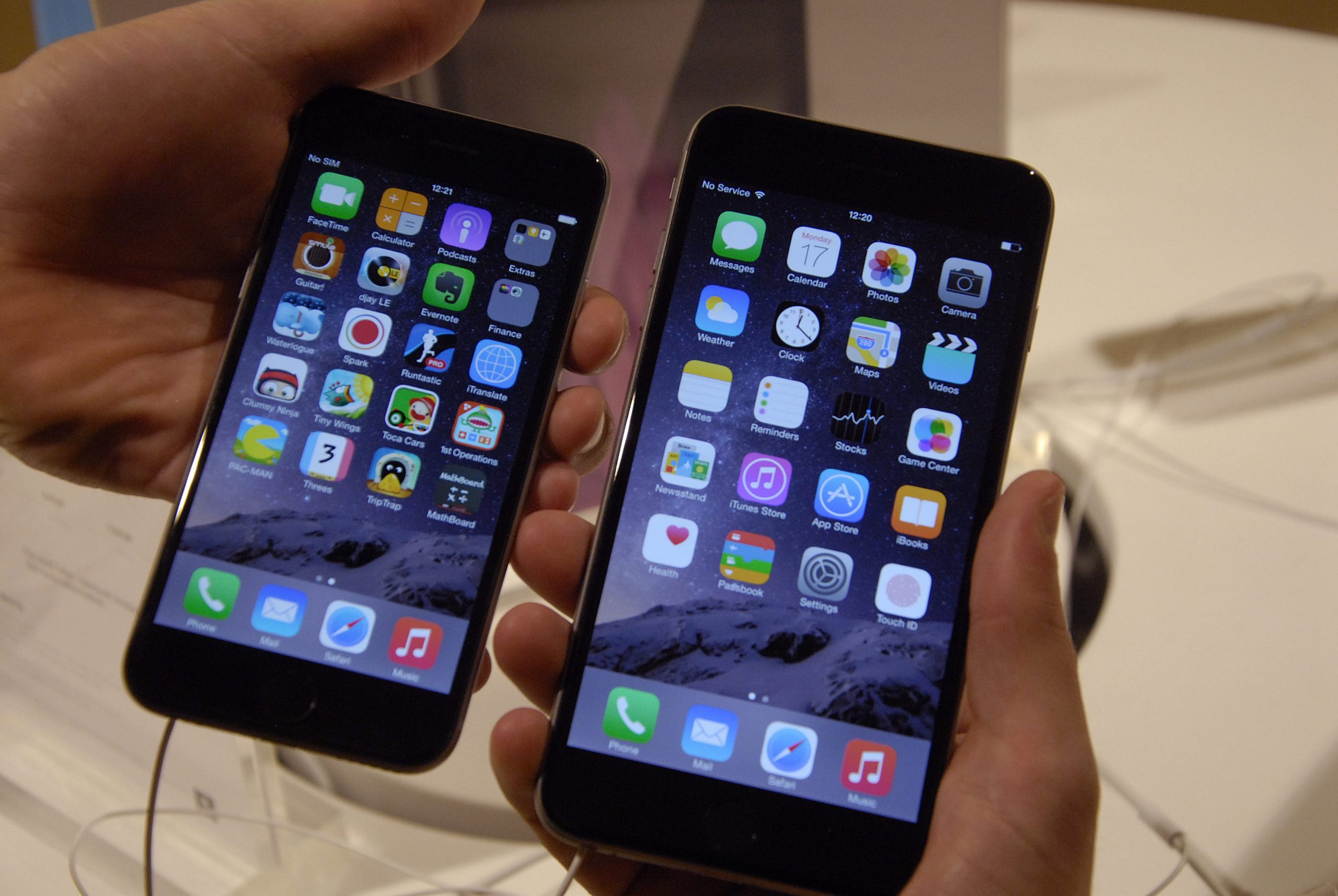
this is a good idea, just like forcing apple to make their phones usbc
So many fuking cables
Oh, yeah, that usbc change was so positive
Never used an iphone so a bit out of the loop on what would be negative about it?
Nothing was negative about it other than Apple’s manevolent compliance.
Apple’s Lightning connector was initially an improvement on microUSB being kinda a not great connector/port. I can’t remember if it also ran at a faster data rate than USB2 or if I’m just mixing up my history with FireWire.
But once USB-C became ubiquitous, Apple’s continued insistence on the Lightning connector was more because being different became a social pressure to switch to and remain in the iOS ecosystem, plus they collect royalties on every lightning connector cable/device sold
Here at Apple we are different, not better just different.
True, though as he pointed out, at the time they released it, it was against microUSB and lightning was better, to be fair.
Then they just ignored USB-C for way too long a time.
yes, it was running at usb2 speeds which was considered slow in 2014. they intentionally limited it to force people to use iCloud to move data around devices instead of sending pictures over the cable.
ironically when they moved to the USB c ports with the 15 series. the base 15 was still usb2 speeds under the hood just with a new chip. the pro, plus, and pro max were faster iirc.
Everyone would be locked into their vendors cable, creating fake inelastic demand. For example, DS chargers would be way overpriced
The EU again, making strides to improve consumer electronics. Thank you EU
They keep flip flopping between hero and villain. I’m getting a headache.
I’m very curious how this will be handled by OEM’s.
Water resistance is pretty much universal at this point, and as far as I know that’s dependent on an airtight seal being maintained throughout the device.
The EU rule forbids use of tools, chemicals or heat to remove the battery. So how does Apple, Google etc retain the IP68 rating if the back is removable via screws?
I obviously think this is a really great step for mobile phones; I miss being able to carry a second battery for long trips back in the day. But I’m concerned that this will also make phones bulkier, heavier and less water resistant.
The Galaxy S5 was water resistant and had a replaceable battery. The main reason they stopped was that Apple was doing glass/metal phones without replaceable anything that still sold like pancakes, so Samsung moved to glass-back phones with the S6 and the rest of the OEMs eventually followed suit.
That is what gaskets are designed to do. Admittedly I haven’t read the regulations, but they could even go as far as making the gasket “single use”. Meaning the battery is user replaceable, but not meant to be constantly swapped. Removing the back cover could require replacing the gasket and using a specific torque value and sequence on the screws the same way you would on any other gasket interface meant to keep dust and liquids in or out.
They could also potentially start waterproofing the circuit boards themselves with conformal coating the way they do with mission critical hardware that needs to still function even if there is some amount of water ingress. I’m not saying I’d be happy with that solution, but it wouldn’t surprise me if they did.
What would also work is waterproofing the phone except of the battery case and use a waterproof connector between the battery and the phone.
That was my first thought as well. Granted phones these days are mostly batteries with as small a circuit board as they can get away with shoved in the remaining space
Which would make it pretty simple to just make this small area waterproof.
So what your saying is I could have a water cooled phone just like a pc
I like the idea, and I suspect gaskets will be the solution they go with, with the back cover applying pressure to the gasket to create a seal. but the EU regulation specifically says that no expertise should be required and you should be able to do it with commercial, standard tools (i.e screwdriver). I don’t think they could make single-use gaskets where you have to purchase additional gaskets from the OEM. I suppose they could come with the battery itself, which the EU requires OEMs to sell for 5 years.
Requiring specific torque values are certainly violating the regulation as that would either require specialised tools are expertise that can’t be expected from regular customers. It also is not necessary for securing water and dust protection. Single use seals are fine as the focus is repair, not battery capacity extension vua battery swap.
Do we know know if requiring specific torque values would violate the regulation? That’s a genuine good faith question. The reason I ask, and what I was thinking of when I made my original comment was cars, and not the new bull shit we have. If I reference the shop manual for any of the vehicles I owned made in the late 80s to early 90s every fastener had a specific torque value specified for their installation from a lug but, to a cable management clip, to a head gasket bolt. Only one of those items I listed ever had a torque wrench brought out to be installed if they were worked on though by a mechanic or an owner.
I’m just wondering if it might be a similar situation.
I don’t know the legislation word by word but I do know it requires that the repair is possible without specialised equipment. How should a simple consumer without special tools apply a precise torque.
Changing a phone battery should be simpler than repairing a car and the regulation also requires it to be simpler.
Well, that’s kinda what I’m getting at. The kind of tool used by a mechanic to install a cable management clip (that the shop manual states has a torque value) is a simple screw driver. I think I have seen seen some computer heatsinks that have listed a recommended torque value as well. Of course I have never grabbed my torque wrench for this either, I have always just gone with feel.
To be clear, I’m not advocating that the manufacturer require users to buy a torque gauge of some kind and get away with it. It can be very helpful though to have a recommended torque value and sequence as a reference point though if they go the route of screws and gaskets. There are tons of other engineering solutions that are possible up to and including just not having an IP rating.
I’m currently using a Fairphone 5 with the back cover removed and in a case and I haven’t ever had any issues.
There are two possibilities. Either the right torque is critical for successful repair. In which case skill is required with simple equipment that cannot be expected from a simple consumer, or the torque has such a high tolerance that the error margin is what a regular screw driver use would comply with, and therefore no torque has to be specified in the repair manual, other than maybe qualitative statements.
Riiiiiiight
Could they potentially leave the innards of the device water proof while the battery itself is not sealed?
Not sure, is the battery waterproof? If I drop my phone in a sink of water, and it’s IP68 rated, would this mean I need to replace my battery immediately?
It’s not hard to make a waterproof battery and a waterproof phone. All you need to waterproof using gaskets is the connector between both of them.
I imagine they’ll lose the water resistance but in terms of bulkiness, idk, my last phone had a replaceable battery that required no tools and it was smaller and lighter than my current phone. I don’t think that’ll be a big deal.
I think it might have worked better if the requirement is for every phone to have an OPTION for a replaceable battery. I.E. manufacturers can provide a “waterproof” or “slim” or whatever version of each model, without a replaceable battery, so long as there’s a version with a replaceable battery as well. With equivalent availability.
I don’t like the idea personally, because the replaceable battery version would be priced up, and likely not given the flagship experience. The point of this law is to prevent ewaste from 2 year old batteries performing badly, and standardising replaceable batteries is the way to stop that. OEMs would just find ways to convince users to buy the phones with no replaceable batteries because they make more money long-term that way. I don’t trust corporations lol.
Thank you EU for making life better for literally everyone
Companies will just make EU specific devices and continue to fuck over the rest of us
This would require them to sacrifice significant economies of scale. With past EU legislation like this what has mostly happened is most devices are pretty much the same for the entire world, but some region-specific devices won’t be compliant because they were never intended for sale in the EU in the first place
they’ll still block access to the battery in the US.
They didn’t bother making a non-USB C iPhone for the US because it was easier to have one model. Could easily be the same. Plus the it’s hard to argue they couldn’t do it when they have done it in the EU.
Oh, you don’t understand. US customers expect their phones to survive one month at a water depth of 11 km, so sadly it is impossible to let them have easily repairable batteries … /s
I mean, it would still be possible to get an iPhone with a removable battery.
import? in this economy? with these tariffs?
At this time of day? In this part of the country? Localized entirely within your kitchen?
Sadly, but I am pretty sure that companies will still find some loophole here and abuse it for their profit.
We will see bug this regilation has already real impact today. The new Neo from Apple is surprisinglx modular and its battery easy to replace with nothing more than s screw driver. Previous laptops were horrendous in this regard. Of course, that is only because Apple found its love for repairability and is not already preparing for the above regulation. Turns out also modern phone batteries can be easily replaceable. You’ll see in a year.
Ah you see you need to buy the Apple brand specific battery for your safety. Inserting a non apple battery is too dangerous! (And doesn’t obselete itself in two years)
This has been a massive no-brainer for quite a while. I think the only iPhone that was pretty close to having this a reality was the iPhone 4, it was really easy to just slide the back open and swap the battery. Not as easy as it could be, but certainly close.
Repairability has never been an Apple thing.
I’ve replaced the keyboard on a Macbook, I swear there were 40 screw in that thing, and I’m not exaggerating for effect or anything. About every 2 keys it was screwed to the case from the bottom.
I’ve also done an iphone battery a couple times for friends, it’s a nightmare, but now pretty much all phones are difficult. I have to do the batteries on my Razr soon and I’m not looking forward to it.
FWIW they’re definitely improving in that regard, probably because they know legislation like this is coming.
The iPhone 16 replaced the frustrating glue strips with a special adhesive that unsticks with an electric current, and the MacBook Neo is apparently really easy to get into for simple repairs.
Still a long way to go, but it’s encouraging.
At least it was screws, often the keyboard is now attached using “plastic rivets” where the plastic was intentionally melted around the holes. Makes replacement of just the keyboard almost impossible.
This was a thing with Samsung from the beginning all the way to the S7. The rational after that was the waterproof rating but I have a Zebra TC27 at work that’s IP rated WITH ad repalcable battery. So it’s easy to do, just cost more than not doing it and for Apple it’s a revenue stream replacing batteries.
The s5 was also water resistant, same rating as every other water resistant galaxy since. Used to have 2 batteries and a separate battery charger so I could just hot swap. I don’t think I ever actually plugged the phone into a charger.
Dude same. So nice to just trickle charge a battery to 80% gently, then just swap
John Apple has a tough path ahead of him
Back to the LG G5 time : https://www.tomsguide.com/us/lg-g5,review-3406.html
🇪🇺
Finally some good news!
Tom Apple did not like that
I wonder if this will take the wind out of the sails of fairphone
Fairphone is about general repairability. Not just about swapping the battery.
I think so. Being able to replace the battery is certainly my main reason to get a fairphone as my next phone and if I was able to replace the battery on my current, degoogled phone right now, I would have nearly no incentive to get a new one.
Playing devils advocate here.
How do you have a phone with replaceable battery and water resistance / proofing
The way we always did, of course. I’ve an underwater camera from the 80s that has user replaceable batteries and film.
The idea that they have to be designed the way they are for dust/waterproofing reasons is just propaganda by the device manufacturers. There’s more money in them not being serviceable because that means that they can upcharge you for fixes, or better, push you to buy a new device when your current device doesn’t work the way it should.
Yea but that underwater camera is encased in a huge plastic shell. Are you going to be carrying around your phone in a huge plastic shell?
It’s actually not as large and bulky as you might think. These ideas aren’t mutually exclusive is the thing. My old work phone was a Samsung XCover. They have replaceable batteries and are waterproof.
They’re a little bulkier than my 16 Pro, but not by that much, and the bulk isn’t really for waterproofing reasons alone.
Seal the phone and leave the battery compartment just weather proof. You’ll still be able to drop the phone in the toilet or whatever and the phone will be basically identical except with a slide off back. We’ve done it before, it’s not impossible.
Again, the idea that having devices be user serviceable leads to them needing to be designed to not be dust or waterproof is just a lie sold to us by the manufacturers. They could make our devices user serviceable, but they choose not to. Every time they’ve been coaxed into even a little bit of consumer friendliness, they oblige in the most malicious ways they can.
What I’m saying is, you don’t need to play the Devil’s Advocate. His position isn’t based on reality.
When I screw the lid onto my coffee cup, it becomes waterproof. Nothing gets in and the coffee doesn’t come out. Waterproofing doesn’t require an adhesive.
Oh I like that. Screw in a circular battery like a large CR2020. Good concept.
The majority of people don’t need phones that can survive underwater. Most get exposed to a bit of rain occasionally and that’s it. So even if it was impossible for both to exist (it isn’t), we don’t need it anyway. People are sold “IP68” or whatever because it allows manufacturers to make their phones harder to repair, that’s the only reason.
I actually use the waterproofing on my phone fairly regularly. I’ve used it to take pictures in and under water and it’s handy to be able to wash it under running water. Also if I’m riding my bike in the rain I don’t have to worry about my phone getting wet or sweat getting into when it’s in my jersey pocket in the summer.
I think it will be pretty hard for Apple to design an iPhone with a removable battery without compromising somewhere. Making it waterproof, with a removable battery, not more bulky and with the same kind of sleek design sounds really hard. Still, it’s good that the EU is forcing them to figure it out.
Yes, you have, but the majority don’t, they only need basic splash protection.
Either way, there will be waterproof phones with removable batteries. They said the same thing when they removed the 3.5mm port, it’s all lies.
What about toilet drops 👀
What about drops from height? We don’t all use super rugged phones incase of that? Just don’t hold your phone over the toilet!
Take a look at the latest gopros. They work underwater, are tiny, and have replaceable batteries. All you need is a watertight seal, and they’ve gotten those down in size by quite a lot.
There are plenty of phones that were designed, manufactured and sold with these two features.
Not all of them use the “case around a camera” approach (although a lot do, admittedly). The Olympus Tough series of cameras don’t, for example. And really, phones would have pretty simple seams around the battery.
You mean like a Samsung Galaxy S5?
Or any of the the ruggedized industrial phones available today?
Its one of those save a dollar in manufacturing and forced obsolecence decisions made in a boardroom.
They have gaslit people into thinking its because of waterproofing.
Screws and an adhesive gasket.
Aren’t screws a myth?
Back cover held by two tiny plastic tabs and your prayers
some thoughts also
Well, I’ve never seen one myself.
Galaxy S5 from 2014
Yes, I had this and it was great